

Live Bee Removal Fallbrook
Call now for a free quote!
Click the link below and fill out the fast, free quote form.
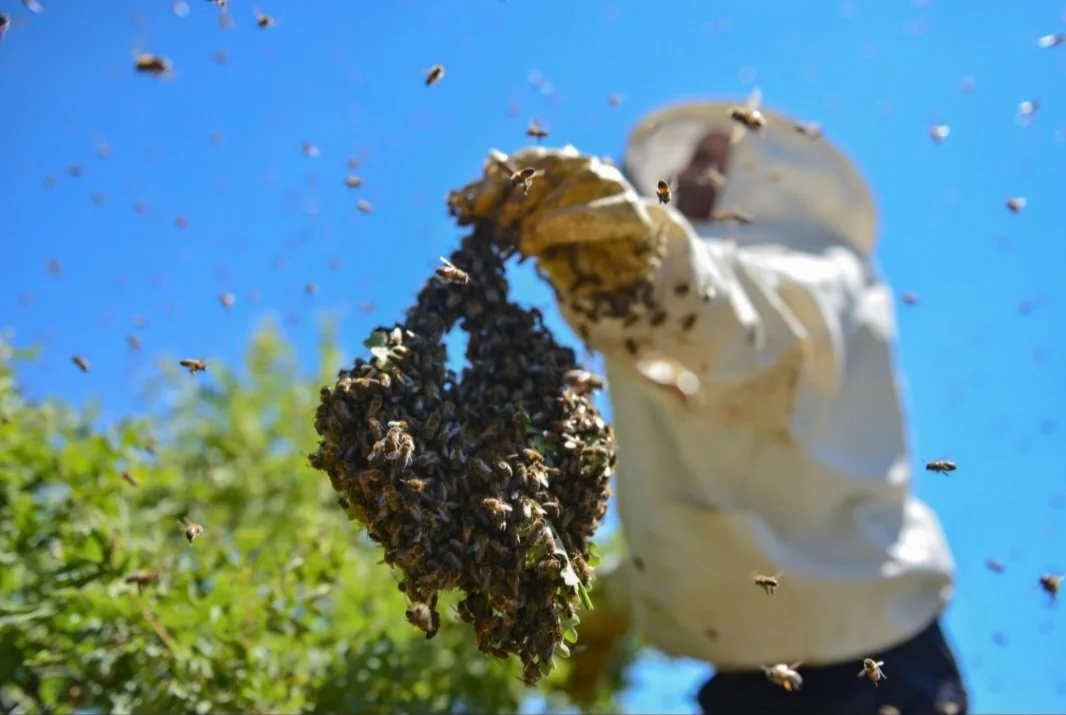
Looking for professional bee removal in Fallbrook? We provide safe, live honey bee removal and hive relocation throughout Fallbrook and the surrounding North County communities. Whether you've found a bee swarm in an avocado tree or discovered bees entering your attic or walls, our team has the experience to remove the colony properly while protecting your home and property.
With more than 25 years of experience in beekeeping and residential construction, we understand both how honey bees behave and how homes are built. This unique combination allows us to locate hidden hives, access difficult areas with minimal damage, and provide long-term solutions to help prevent future infestations.
Live bee hive removal
Bees are relocated to areas away from homes and businesses
Residential & Commercial Removals
Bee proofing is included as part of the removal process
We bee proof the hive location and remove the entire nest to eliminate scent to prevent new bee colonies from returning.
Emergency aggressive bee removal (see our blog about “Killer Bees”)
Same-day service in most areas
6 month warranty on all removals!
Bee Removal and Hive Relocation Fallbrook
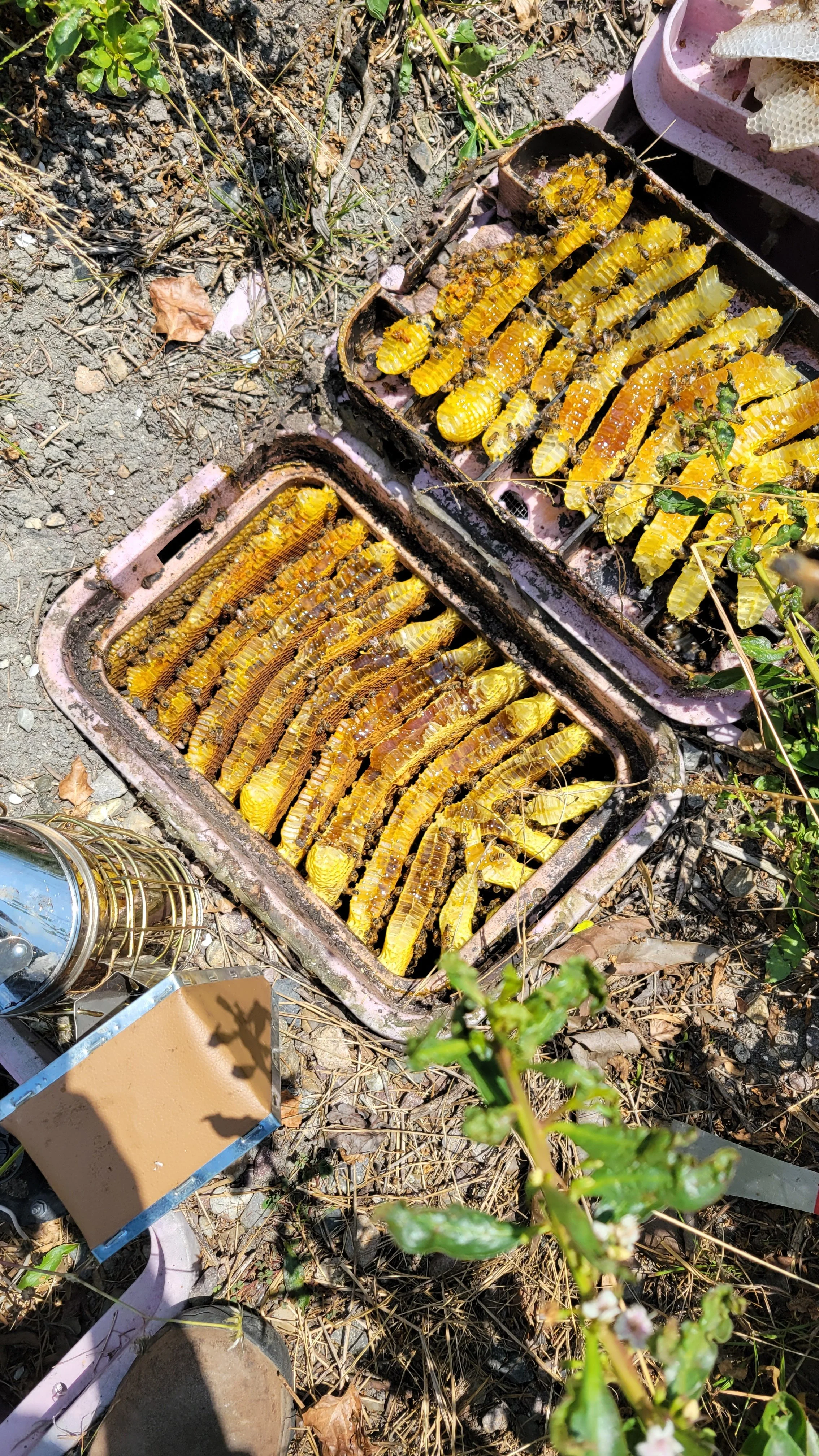
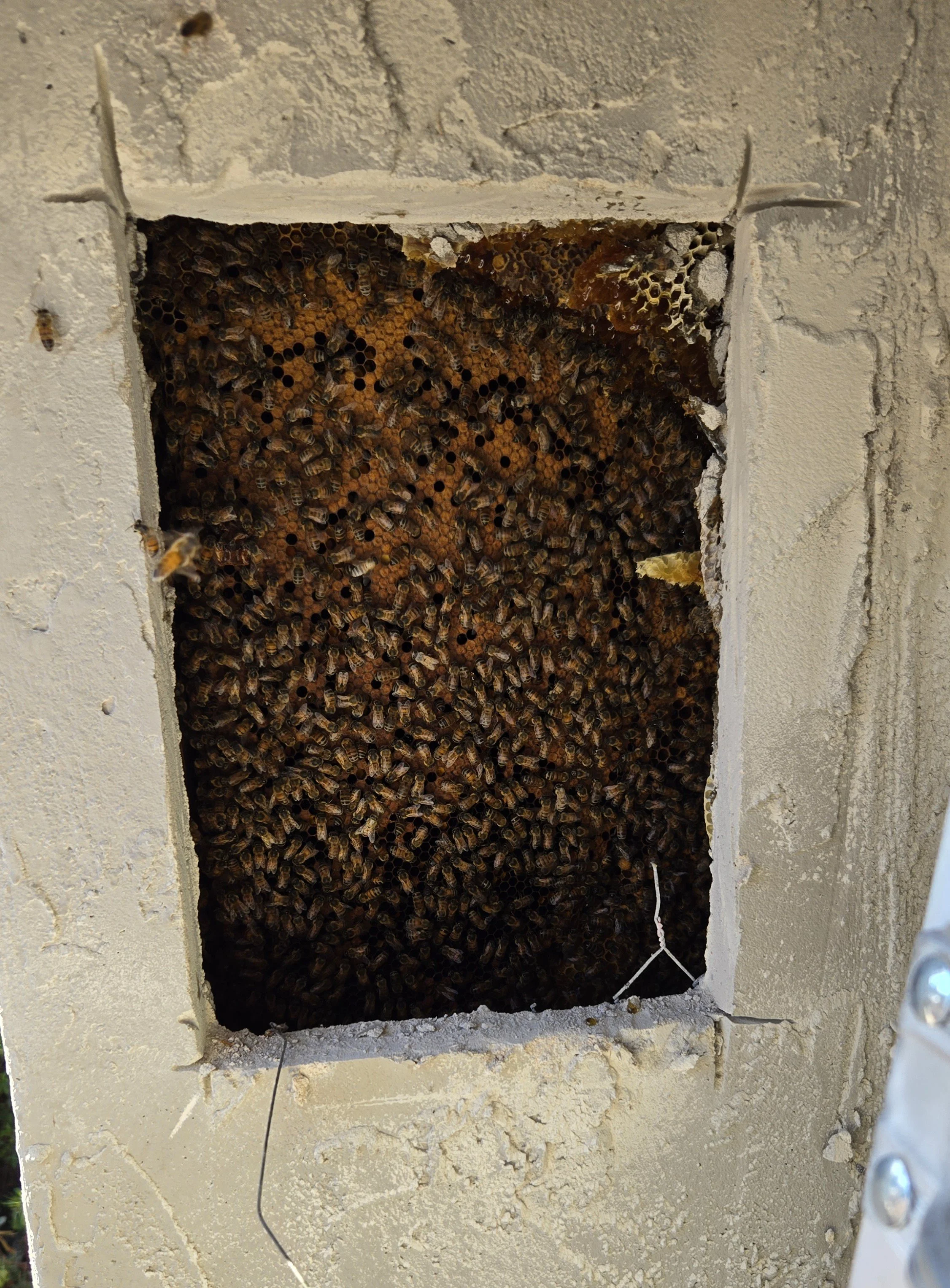
If you've found a bee hive on your Fallbrook property, it's important to act before the colony grows. In Fallbrook's mild, warm climate, honey bee colonies can remain active year-round and build surprisingly large hives in a short period of time. Bee colonies commonly settle in protected spaces — wall cavities, attics, water meter boxes, shed walls, and the eaves of older ranch-style homes — where the hive is often invisible from the outside.
Once established, a colony rapidly builds honeycomb and stores honey. Left untreated, a hive inside a wall or roof can grow to tens of thousands of bees. The stored honey and wax attracts additional pests — ants, rodents, wax moths, and roaches — even long after the bees themselves are gone. Proper removal means taking out the bees, the honeycomb, and sealing the entry point so a new swarm doesn't move in and start the process over again.
Why Fallbrook Residents Trust Us for Bee Removal
Known as the "Avocado Capital of the World," Fallbrook has an abundance of mature trees, orchards, flowering landscapes, and large rural properties that create an ideal environment for honey bees. Swarms and established colonies are extremely common throughout the area, especially during the spring and early summer months.
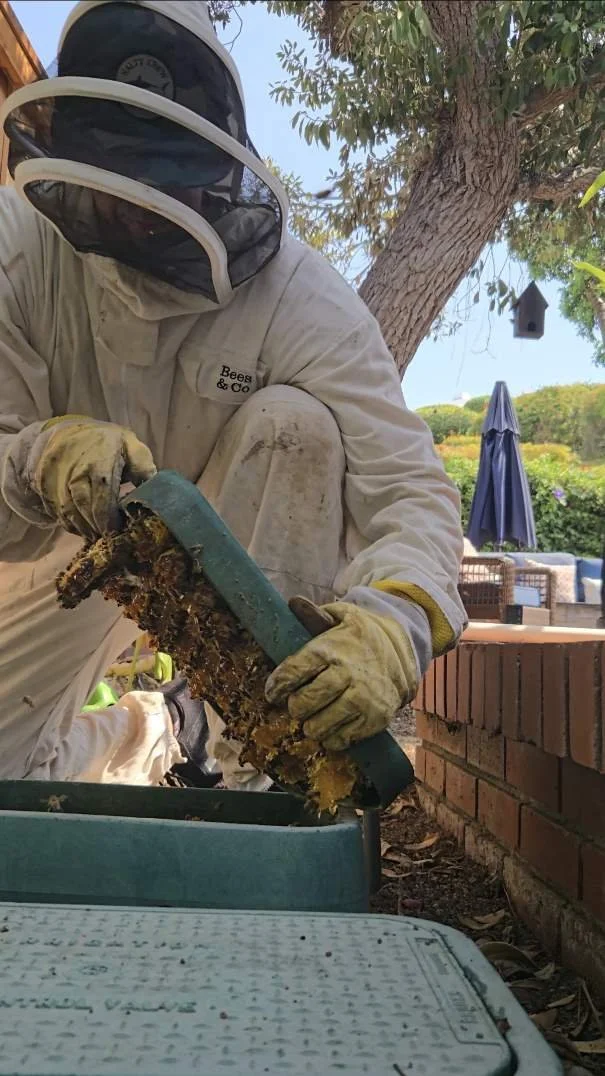
Homeowners throughout Fallbrook choose us because we specialize in live bee removal and understand the unique challenges of both rural and residential properties. From custom homes in the hills to homes surrounded by citrus and avocado groves, we regularly remove bee colonies from structures, outbuildings, and landscape features.
Whenever possible, healthy honey bee colonies are safely relocated to local beekeepers and agricultural properties where they can continue pollinating.
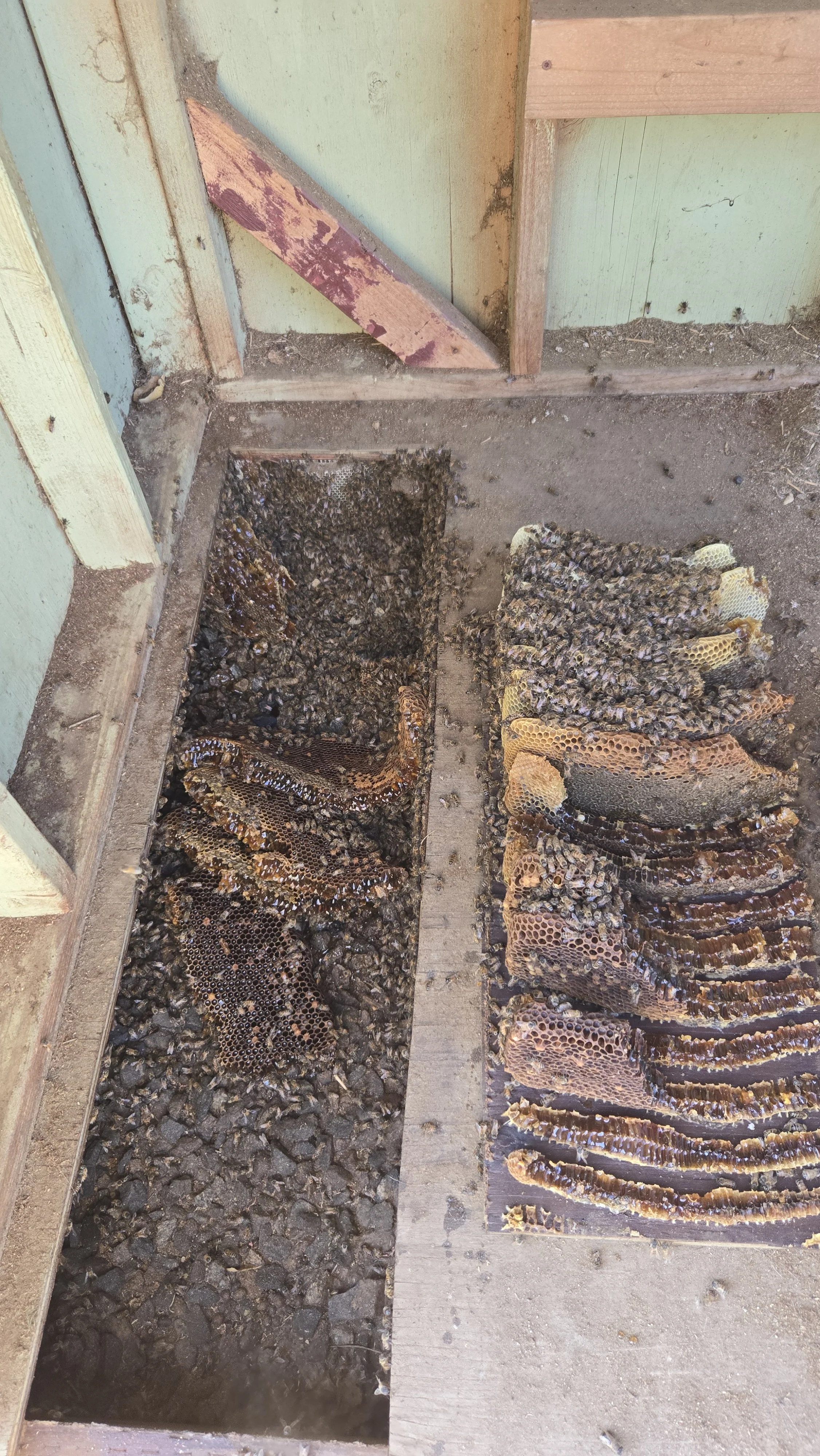
Bee Removal Process
A complete bee removal involves more than simply eliminating the visible bees. Honeycomb left behind in a wall or attic contains wax, stored honey, and brood that continues to attract pests and new swarms long after the original colony is gone.
A full removal typically includes:
Locating the hive (we use thermal imaging for hidden hives)
Safely removing the bees — live, whenever possible
Removing all honeycomb and hive material
Cleaning and treating the affected area
Sealing entry points to prevent reinfestation
We carry a 6-month warranty on all structural removals. If bees return to the same location during the warranty period, we'll address it at no additional charge.
Areas of Fallbrook We Serve
We provide bee removal services throughout Fallbrook and the surrounding communities, including Rainbow, De Luz, and the Pala Mesa area. Neighborhoods and communities where we frequently work include:
Live Oak Park area
Pala Mesa Village
Mission Road corridor
Old Stage Road and hillside properties
Reche Road and De Luz
Rainbow (zip code 92028)
East Fallbrook and rural parcels
Zip codes served:
92028 (Fallbrook)
92059 (Pala, eastern Fallbrook surroundings)
92028 (Rainbow)
Bee Removal in Fallbrook
If you're dealing with bees on your property in Fallbrook, don't wait for the colony to grow. Early removal is faster, less expensive, and causes less damage to your structure.
Call 619-800-8521 for a free quote, or submit a request through our contact form. Photos of the bee activity help us assess the situation and respond faster.
FAQs Fallbrook
How do I know if bees are inside my wall? The most common sign is bees repeatedly flying in and out of the same small crack or gap in your siding, stucco, or roofline. You may also hear a low hum or buzzing from inside the wall, especially when all is quiet inside your house.
Can a bee hive damage my home? Yes. A large colony inside a wall will produce significant amounts of honeycomb. In Fallbrook's heat, that honey can liquefy and seep through drywall, causing staining, soft spots, and structural damage over time. The wax and honey also attract additional pests once the bees are gone.
Are Africanized bees common in Fallbrook? Africanized honey bees (also called "killer bees") are present throughout inland San Diego County, including Fallbrook. They look identical to European honey bees but behave much more defensively. If a hive becomes aggressive or you've been stung multiple times without provocation, call us immediately for emergency removal.
Will bees come back after removal? If any honeycomb or wax is left behind and the entry point isn't sealed, new scout bees can detect the scent and move a fresh colony into the same spot. Our removals include complete honeycomb extraction, pheromone treatment, and sealing of entry points to break this cycle.
Do you serve rural and horse properties? Yes. We regularly work on larger agricultural and equestrian properties throughout Fallbrook and De Luz. These properties often have multiple structures that require inspection.
Bee Removal Near Me
Locations:
San Diego - Del Mar - Carmel Valley - Carlsbad - Rancho Santa Fe - Encinitas - La Jolla - Poway - Vista - San Marcos - Rancho Bernardo - El Cajon - Escondido - Fallbrook - Bonsall - Chula Vista - Rancho Penasquitos - Mira Mesa - Clairemont - Pacific Beach - Scripps Ranch - Point Loma - Oceanside and Surrounding Areas