

Bee Removal Chula Vista
Call now for a free quote!
Click the link below and fill out the fast, free quote form.
If you've found bees flying into your home or discovered a swarm on your property, Bee Dash Rescue provides professional live bee removal and bee swarm removal throughout Chula Vista and South San Diego County. Whether the colony is inside a stucco wall, attic, garage, or another hidden space, we'll safely remove the bees, remove the honeycomb, and humanely relocate the bees to beekeepers or citrus farms where they can continue pollinating California flowers.
With more than 25 years of experience in beekeeping and residential construction, we understand both how honey bees establish colonies and how homes are built. This experience allows us to accurately locate hidden hives, access them with minimal disruption, and provide recommendations to help keep bees from returning.
Live bee hive removal
Bees are relocated to areas away from homes and businesses
Residential & Commercial Removals
Bee proofing is included as part of the removal process
We bee proof the hive location and remove the entire nest to eliminate scent to prevent new bee colonies from returning.
Emergency aggressive bee removal (see our blog about “Killer Bees”)
Same-day service in most areas
6 month warranty on all removals!
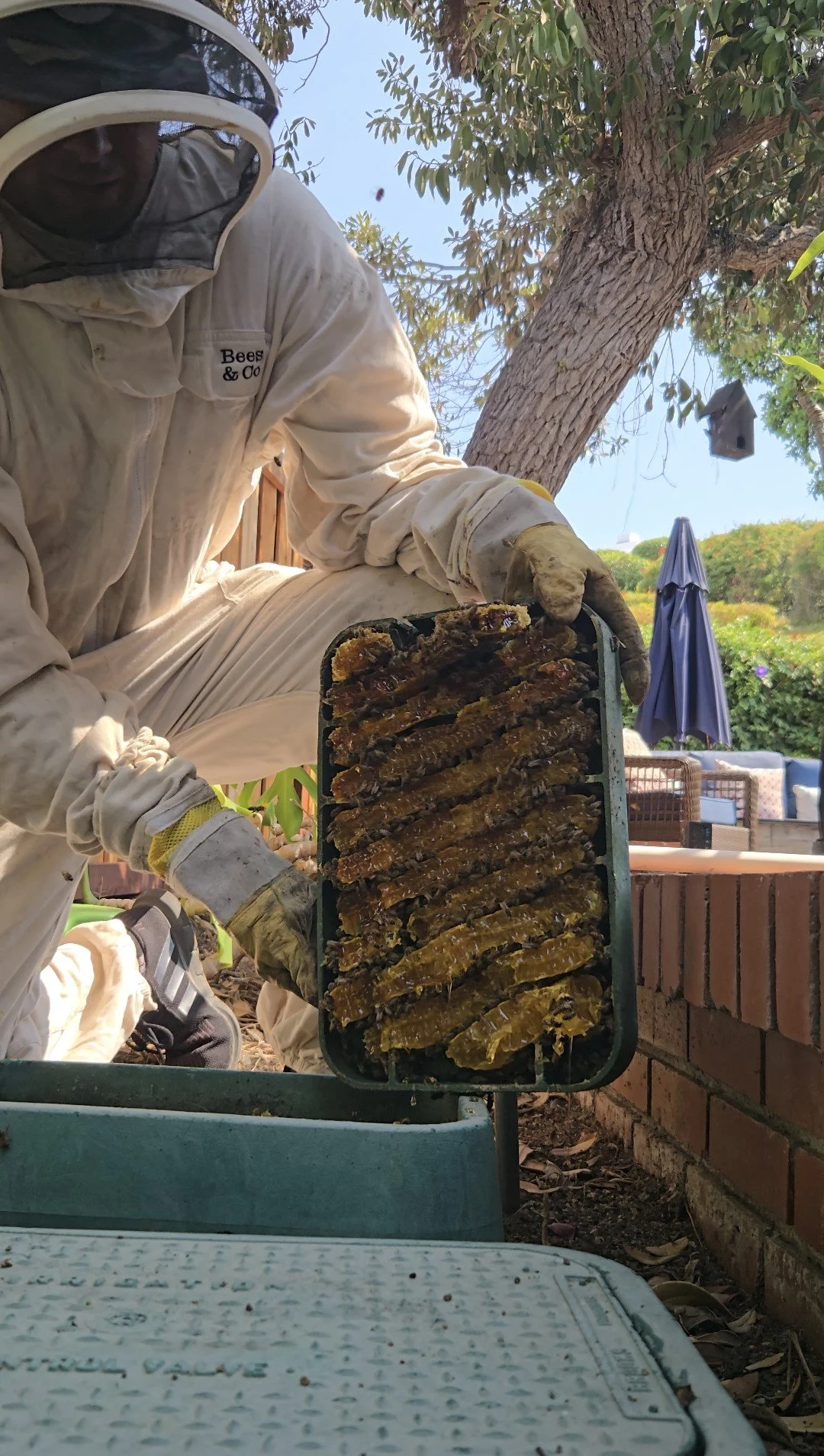
Why Chula Vista Homeowners Call Bee Dash Rescue
Chula Vista offers a wide variety of homes, from established neighborhoods with mature trees to newer master-planned communities. Combined with the city's warm climate, flowering landscapes, canyon open spaces, and nearby parks, these conditions create an ideal environment for honey bees throughout much of the year.
Many of the bee removals we perform in Chula Vista involve colonies that have quietly occupied a home's walls or attic for months before the homeowner notices increased bee activity. Because we specialize in structural bee removal, we know where to look and how to remove the entire hive—not just the visible bees.
Whenever conditions allow, healthy honey bee colonies are relocated to local beekeepers and agricultural areas where they continue pollinating California's orchards and crops.
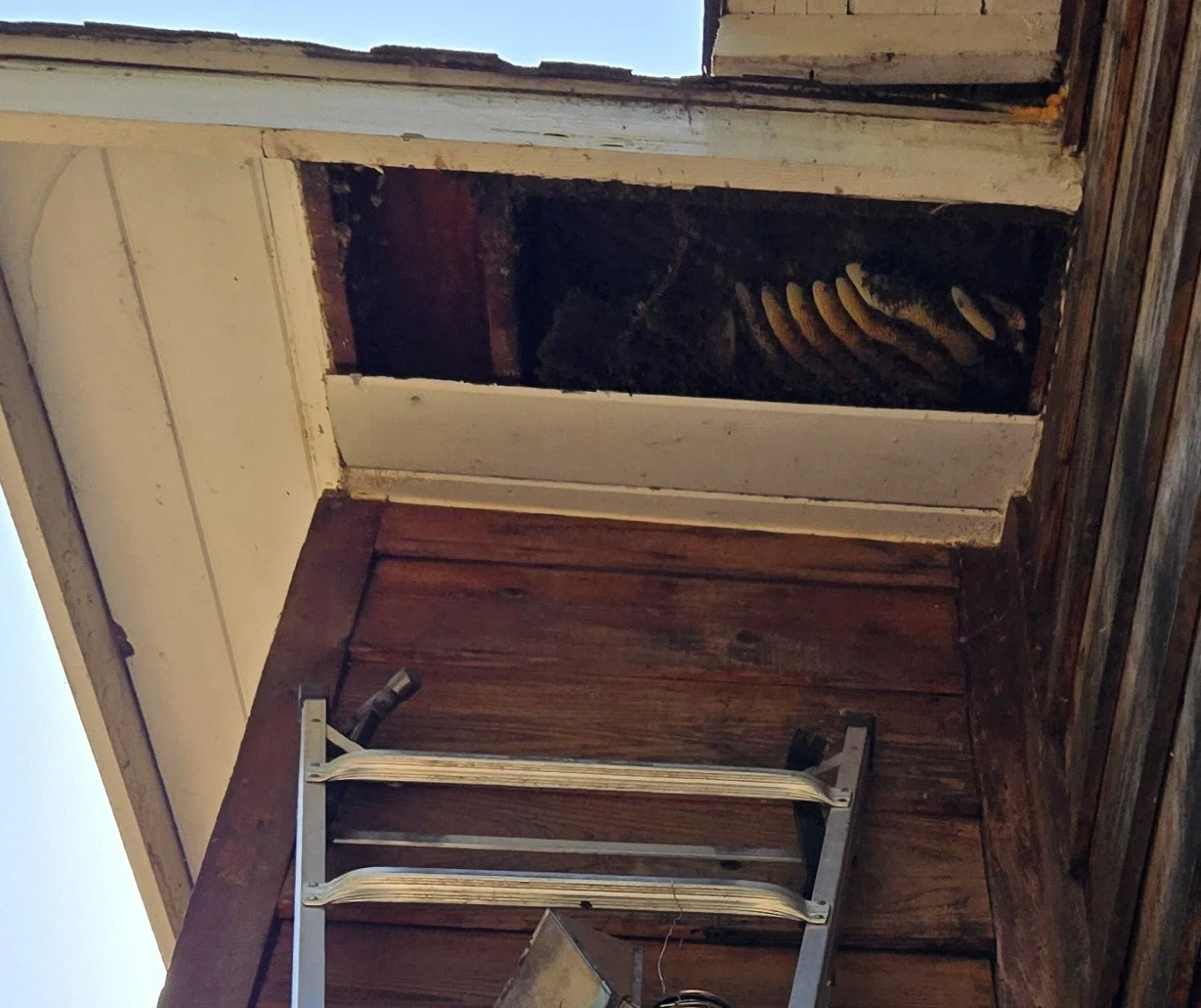
Where Bees Build Hives in Chula Vista Homes
Chula Vista's housing reflects the city's growth history: older wood-frame construction in western neighborhoods near Third Avenue and downtown, and extensive post-1990 stucco-and-tile tract development throughout Eastlake, Otay Ranch, and Rolling Hills Ranch. Each construction type has its own vulnerability profile, and the city's geographic extent means we encounter both in regular service here. Common hive locations in Chula Vista include:
Original wood-frame eave and soffit voids in older western Chula Vista neighborhoods
Tile roofline ridge caps and eave gaps throughout Eastlake and Otay Ranch
Canyon-adjacent retaining walls and block fencing in hillside communities
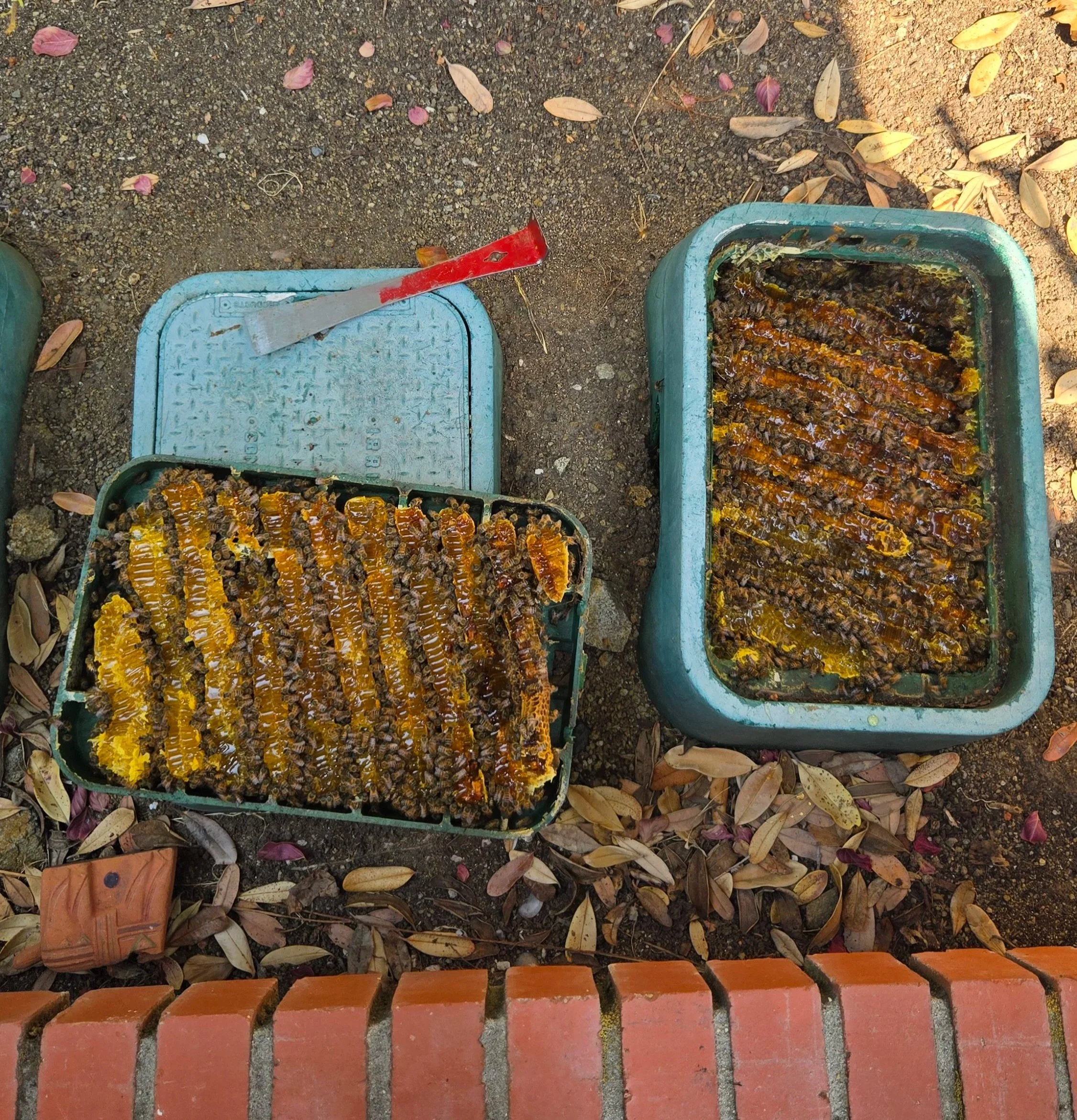
Irrigation valve boxes in HOA-managed common areas throughout newer developments
Commercial building HVAC and facade gaps in the Otay Ranch Town Center area
Pool equipment enclosures and backyard structures throughout newer tracts
Signs a Colony Has Moved In
Bees entering the same gap in a roofline, wall, or utility box repeatedly are the clearest sign. In Chula Vista's newer developments, a gap around an HVAC penetration or a shifted roof tile is typically the entry point — look for bees investigating a specific location on your exterior rather than moving freely across the whole roofline.
Neighborhoods and ZIP Codes We Serve in Chula Vista
We serve all of Chula Vista including Eastlake, Otay Ranch, Rolling Hills Ranch, Bonita, Heritage, Rancho del Rey, and western Chula Vista neighborhoods near the Third Avenue corridor.
ZIP codes served: 91910, 91911, 91913, 91914, 91915
Ready to Resolve Your Bee Problem in Chula Vista?
Call 619-800-8521 for same-day bee removal in Chula Vista, CA, or fill out our quick quote form. Photos of bee activity help us assess quickly.
Frequently Asked Questions — Chula Vista
Our new Otay Ranch home was built in 2018 — can bees really get into brand-new construction? Yes. Even recent construction has gaps around HVAC conduit, plumbing penetrations, and utility installations in stucco walls. Roof tile installations also frequently leave small gaps at ridge caps and near eave edges that develop slightly as the home settles. Newer homes in Otay Ranch and similar developments are among the most common call types we receive in Chula Vista — the assumption that new construction is sealed tight is one of the reasons these infestations are often discovered later than they should be.
We're backing up to the Otay River Valley — should we expect bee activity every year? Properties bordering the Otay River corridor and Otay Lakes area are in direct contact with established wild bee habitat and should expect regular swarm activity during swarming season, particularly in spring. The practical approach is annual inspection of known vulnerability points on your home's exterior — particularly roofline edges and utility penetrations — in early spring, before the main swarming season. Prompt removal and bee-proofing after any hive is discovered is the most effective way to reduce recurrence.
Can a bee hive in a wall affect the HOA's responsibility in a shared-wall community? In townhomes and attached-unit communities — common throughout newer Chula Vista developments — hive location within a shared wall raises questions about HOA versus individual unit owner responsibility. We document all removal work and can provide the detail needed for HOA communications or insurance. Contact us to discuss the specifics of shared-wall situations in your community.
Bee Removal Near Me
Locations:
San Diego - Del Mar - Carmel Valley - Carlsbad - Rancho Santa Fe - Encinitas - La Jolla - Poway - Vista - San Marcos - Rancho Bernardo - El Cajon - Escondido - Fallbrook - Bonsall - Chula Vista - Rancho Penasquitos - Mira Mesa - Clairemont - Pacific Beach - Scripps Ranch - Point Loma - Oceanside and Surrounding Areas