

CALL TODAY! 619-800-8521
Structural Bee Removal in San Diego: How Professional Live Hive Removal Protects Your Home
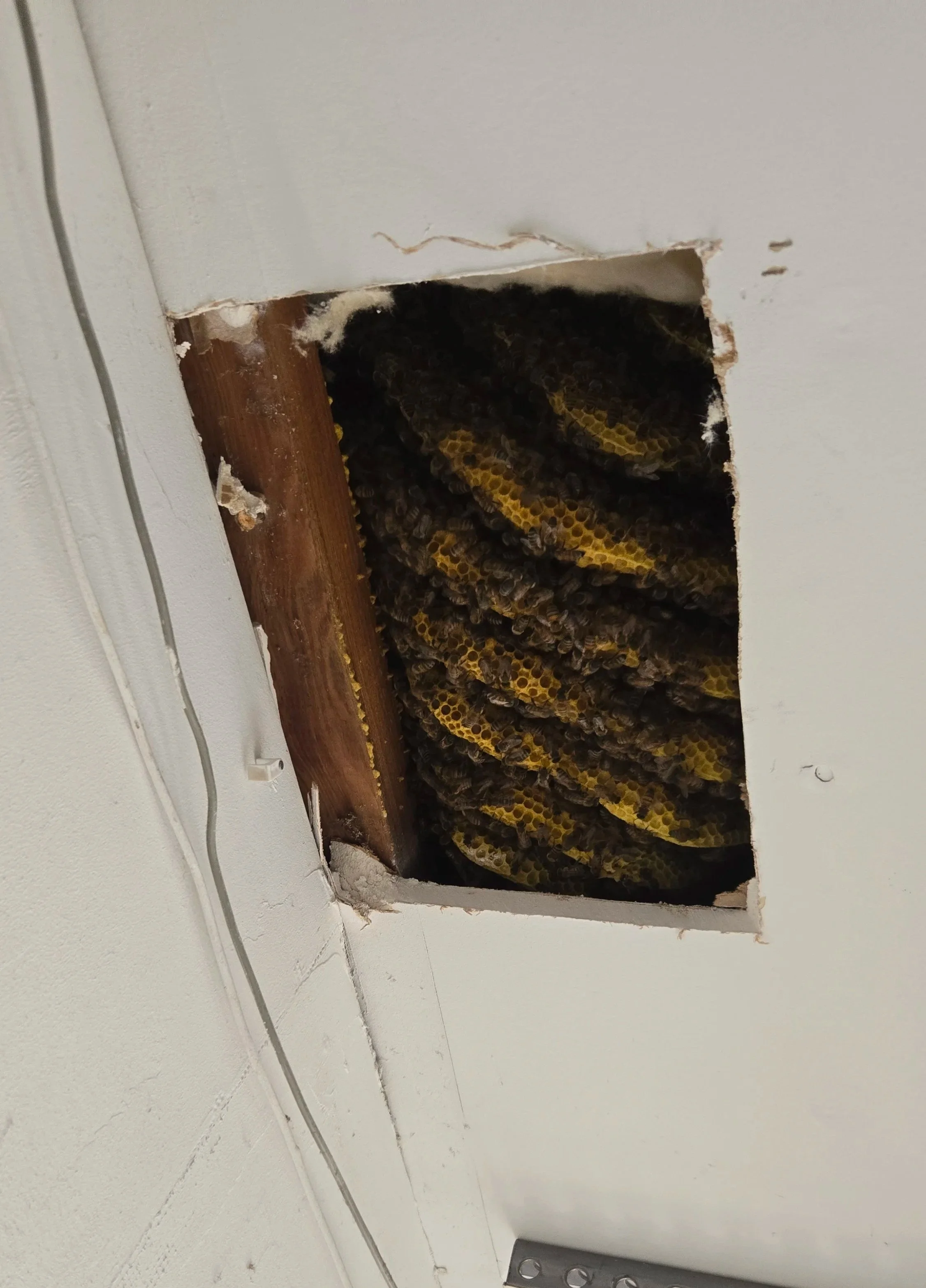
When honey bees move into a wall, attic, roof, or another part of your home, the bees flying outside are only the visible part of the problem. The real issue is hidden inside the structure—the hive, the honeycomb, the stored honey, and the colony that has been building behind the surface.
Many homeowners initially think the solution is simple: remove the bees and seal the hole.
Unfortunately, structural bee removal is rarely that easy.
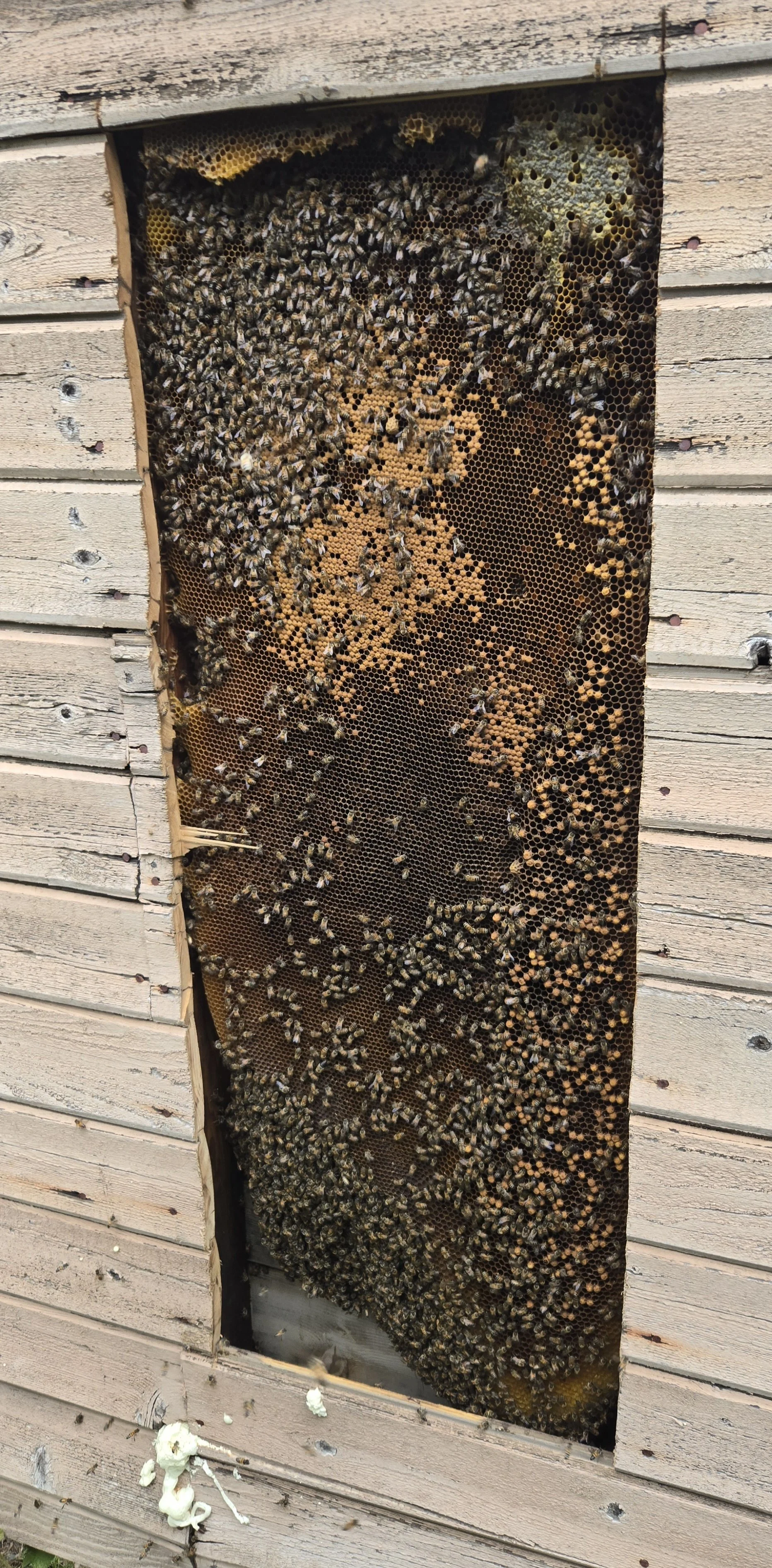
A honey bee colony inside a home has created an entire ecosystem. The bees have built wax comb, stored honey, raised brood, and established a permanent nesting location. If the colony is removed but the hive material is left behind, the homeowner can still face problems long after the bees are gone.
At Bee Dash Rescue, we specialize in live structural bee removal throughout San Diego County. With more than 25 years of experience in beekeeping and residential construction, we approach bee removal differently than companies that only focus on eliminating the insects.
Our goal is not just to remove bees.
Our goal is to remove the entire hive, protect your home, repair the affected area, and prevent another colony from moving into the same location.
The First Question I Ask: How Long Have the Bees Been There?
One of the first questions I ask a homeowner when they call about bees inside a wall is:
"How long have you noticed the bees?"
This question tells me a lot about what we may find during the removal.
A new colony that has only been inside a structure for a short period of time may have a relatively small amount of comb and honey stored. The removal may be straightforward.
However, a colony that has been left alone for years can become a much larger project.
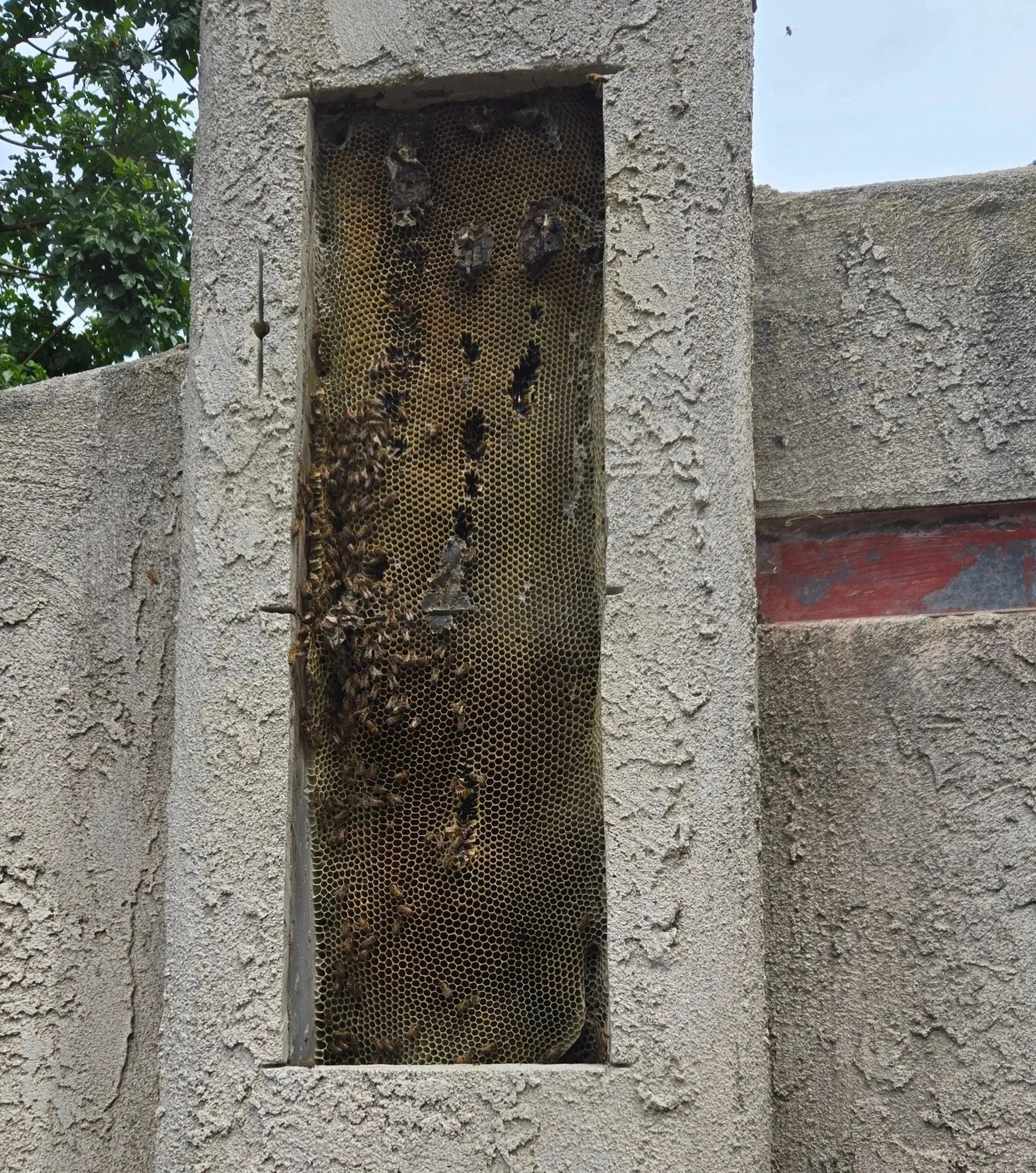
A hive that has been established for five years or more may contain:
Large sections of honeycomb
Significant honey stores
Multiple areas of brood
A large population of bees
Extensive use of the available cavity
The longer a hive remains inside a structure, the more complicated the removal can become.
This is why I always recommend addressing a structural bee problem as soon as it is discovered.
Waiting usually does not make the problem disappear.
It allows the colony to grow.
How Bees Get Inside Walls and Other Structures
Honey bees are excellent at finding protected spaces.
Homes provide many locations that resemble the natural cavities bees would normally choose in trees.
Common structural locations where I find bee colonies include:
Stucco walls
Wall cavities
Attic spaces
Roof areas
Siding
Eaves and enclosed exterior spaces
Chimneys
Utility openings
Other protected voids
The entry point is usually not the difficult part.
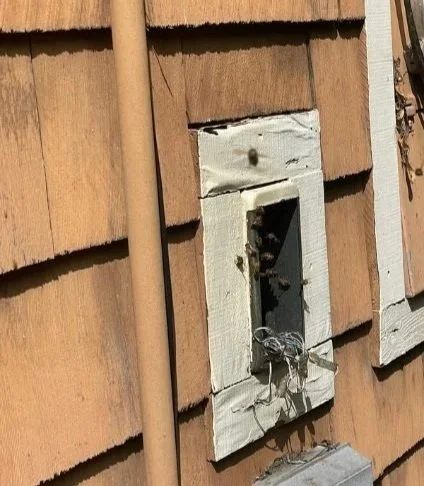
Homeowners can often see where bees are entering and exiting the structure.
The challenge is determining:
Where are the bees actually building the hive?
A small opening in the exterior of a home can lead to a large hidden colony behind the surface.
That is where experience and proper tools become important.
Using Thermal Imaging to Locate Hidden Bee Hives
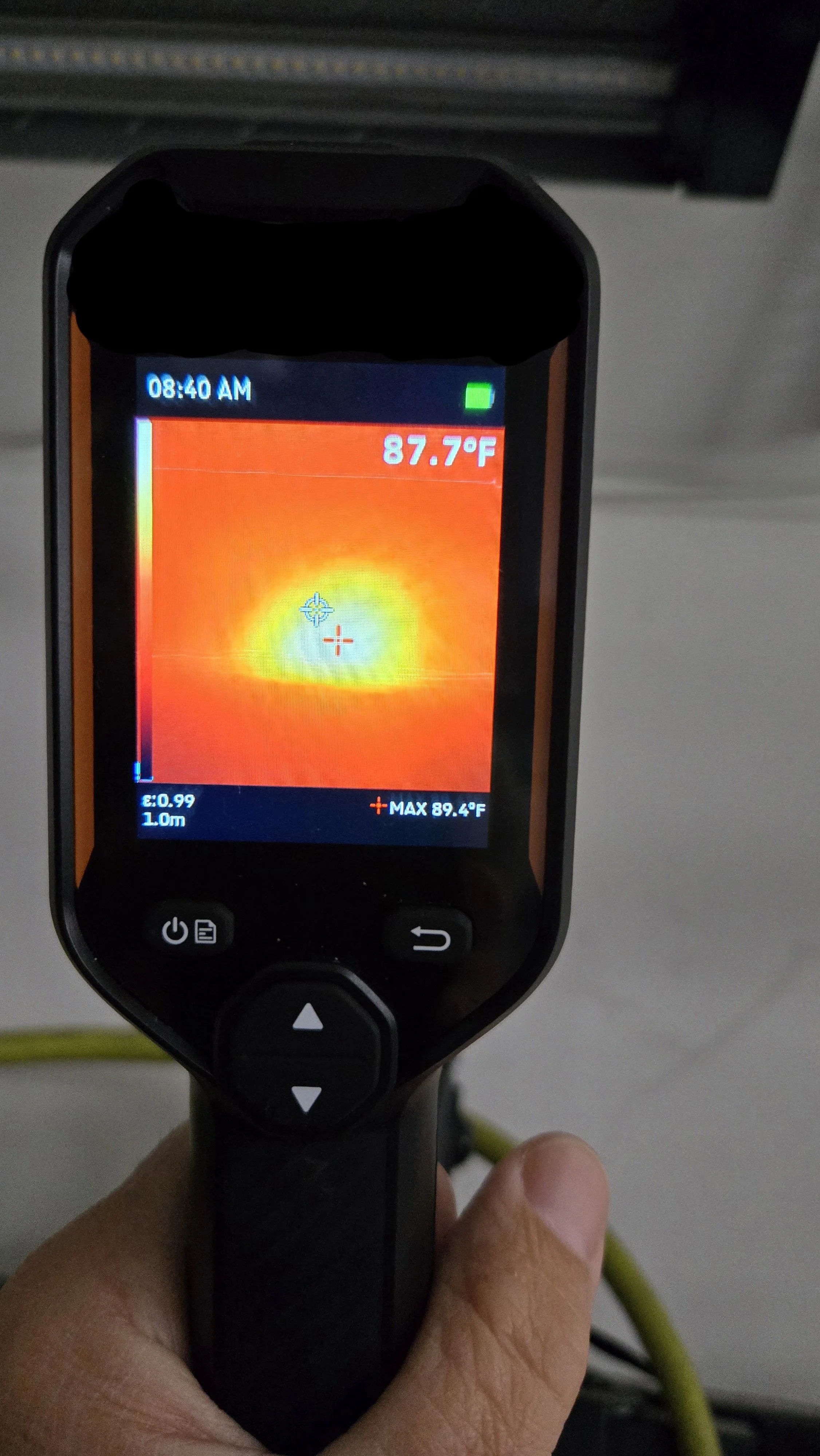
For most structural bee removals, I use thermal imaging to help determine where the colony is located inside the structure.
Thermal imaging is valuable because it helps identify the area where the bees are actively building and clustering.
This allows us to better determine:
Where the hive is located
How large the colony may be
Where the brood area is likely positioned
Where access should be made
The goal is not to randomly open walls searching for bees.
The goal is to make a precise opening that allows complete removal while minimizing unnecessary damage to the home.
This is especially important because every opening that is made has to eventually be repaired.
The Structural Bee Removal Process
Every removal is different, but the overall process follows the same basic principles.
1. Locate the Colony
After evaluating the situation and using thermal imaging when necessary, we determine where the hive is being built.
The location of the colony—not just the entry point—is what determines how the removal should be performed.
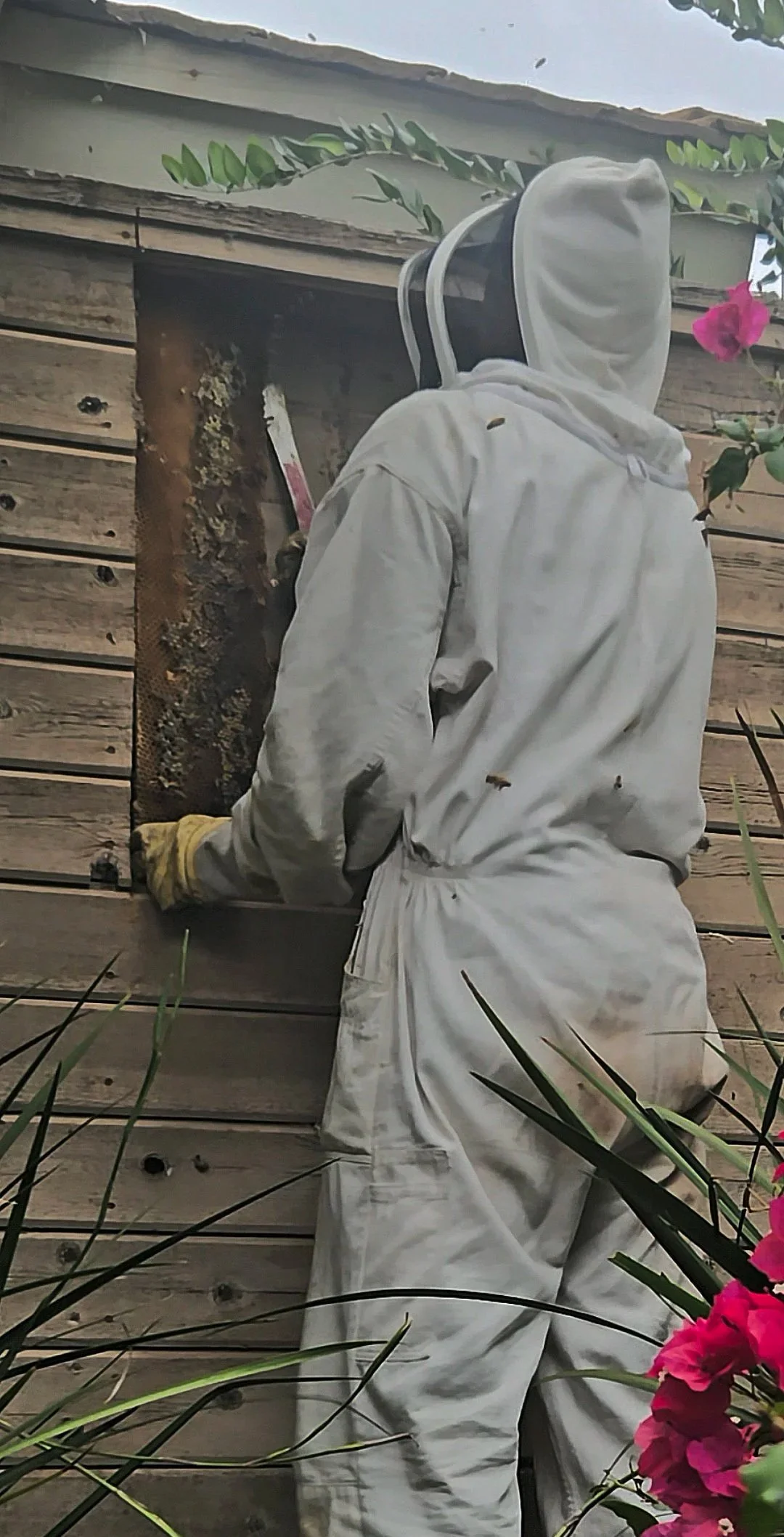
2. Carefully Open the Structure
Once the hive location is confirmed, the affected area is opened carefully.
Because of my background in residential construction, I understand how homes are assembled and how to minimize unnecessary damage during access.
The approach depends on the location:
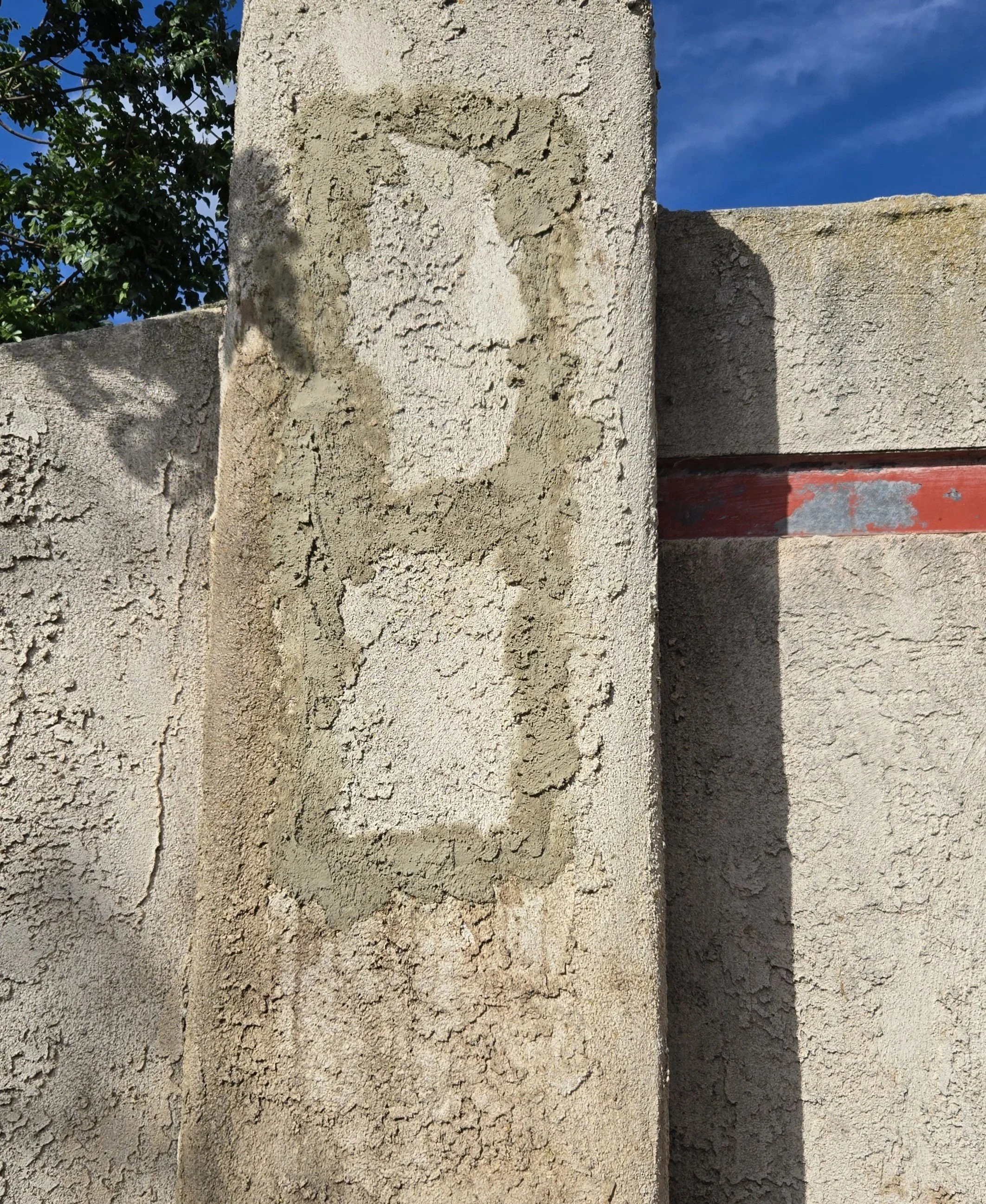
Stucco may require careful cutting and texture matching afterward
Drywall may need to be opened and repaired
Siding may need to be removed and restored
Roof areas require careful sealing and repair
The goal is always complete hive removal while preserving the integrity of the home.
3. Remove the Bees and Honeycomb Together
During a live structural removal, the bees and comb are removed together.
As each section of comb is removed, the bees are vacuumed from the comb and safely collected.
The queen is usually located near the brood comb, where developing bees are raised. Finding and capturing the queen is an important part of successfully relocating a colony.
A successful live removal requires patience.
The goal is not simply to remove the easiest visible bees.
The goal is to remove the colony completely.
4. Remove All Remaining Hive Material
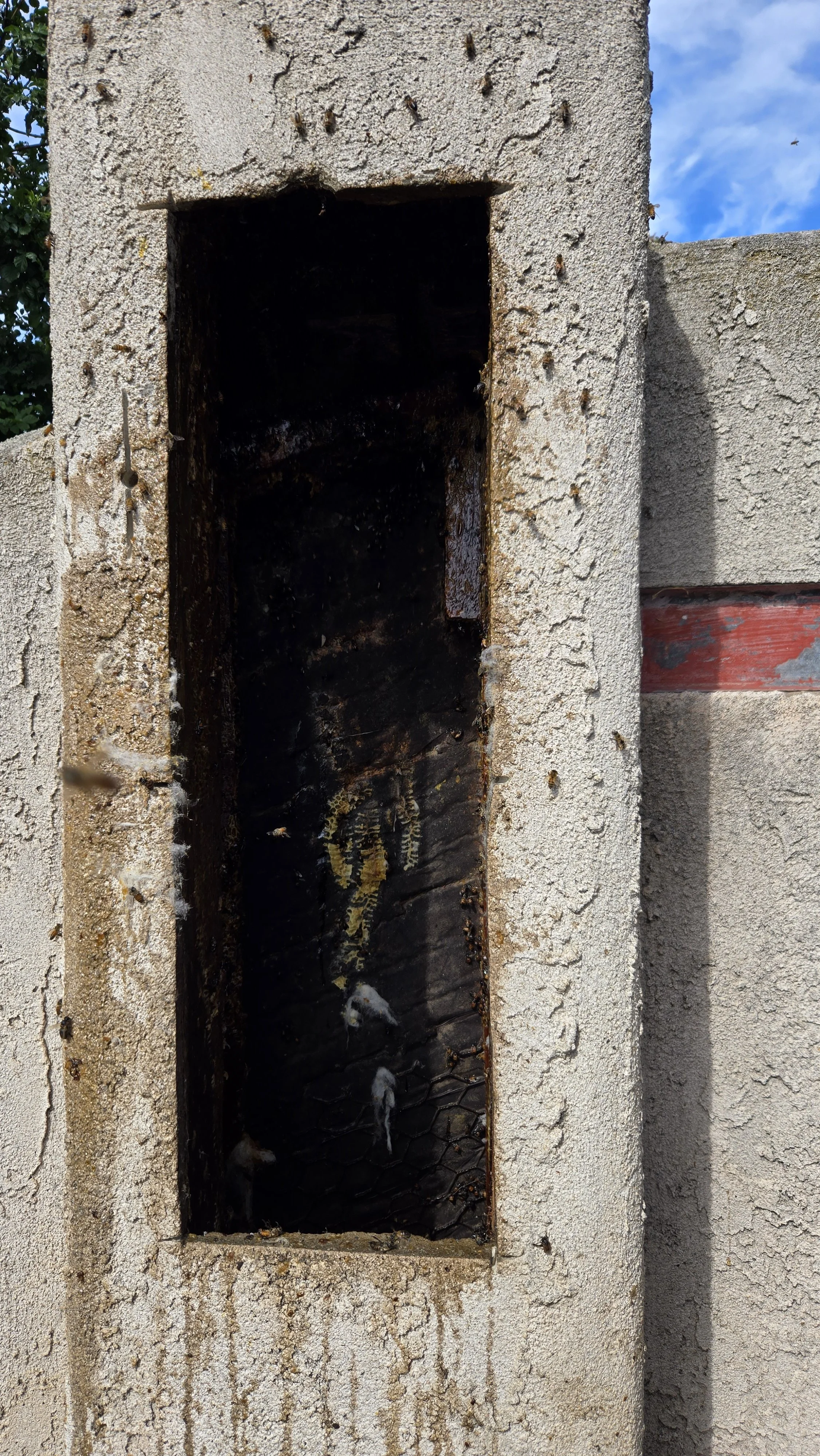
After the bees are removed, the remaining honeycomb and wax must also be removed.
This is one of the most important steps in structural bee removal.
Leaving comb behind can lead to:
Honey leaking into walls
Wax melting in hot areas
Brood decay
Odors
Wax moth infestations
Attraction of future swarms
After the comb is removed, remaining wax is scraped away and a scent-cover treatment is applied to reduce the pheromone signals left behind by the colony.
Why Structural Bee Removal Requires Construction Experience
A structural bee removal is not just a bee problem.
It is also a construction problem.
Removing a hive from inside a home means understanding:
Where to safely access the structure
How to avoid unnecessary damage
How to restore the opening afterward
How to seal the area properly
This is where Bee Dash Rescue has a major advantage.
Many bee removal companies can remove bees.
Many contractors can repair walls.
Bee Dash Rescue combines both skill sets.
With 25 years of construction experience, we understand what happens after the bees are gone.
We don't leave homeowners searching for another company to repair the damage.
We can handle the removal and the restoration.
Bee-Proofing: Preventing Another Hive From Moving In
Removing a bee colony from your home solves the immediate problem, but preventing another colony from moving into the same location is just as important.
Honey bees are naturally attracted to protected cavities. If a previous hive location remains open, empty, and accessible, it can become an ideal nesting site for another swarm in the future.
A common mistake homeowners make is simply sealing the outside entrance where they see bees entering.
While that may stop visible bee activity, it does not address the underlying problem.
If bees are already established inside a structure, the hive needs to be removed first. Closing the entrance without removing the colony can trap bees inside, leave behind honeycomb and pheromones, and create additional problems.
A proper structural bee removal includes removing the colony, addressing the hive cavity, and making the area less attractive to future bees.
How Bee Dash Rescue Bee-Proofs Structural Hive Locations
Bee-proofing is part of the repair process and may begin before, during, and after the removal depending on the situation.
The goal is to eliminate the conditions that allowed the bees to establish the hive.
This may include:
Filling Empty Hive Voids
Honey bees are attracted to cavities that provide protection from weather and predators.
If a wall or structural space contains a large empty void after removal, it can remain an attractive location for another swarm.
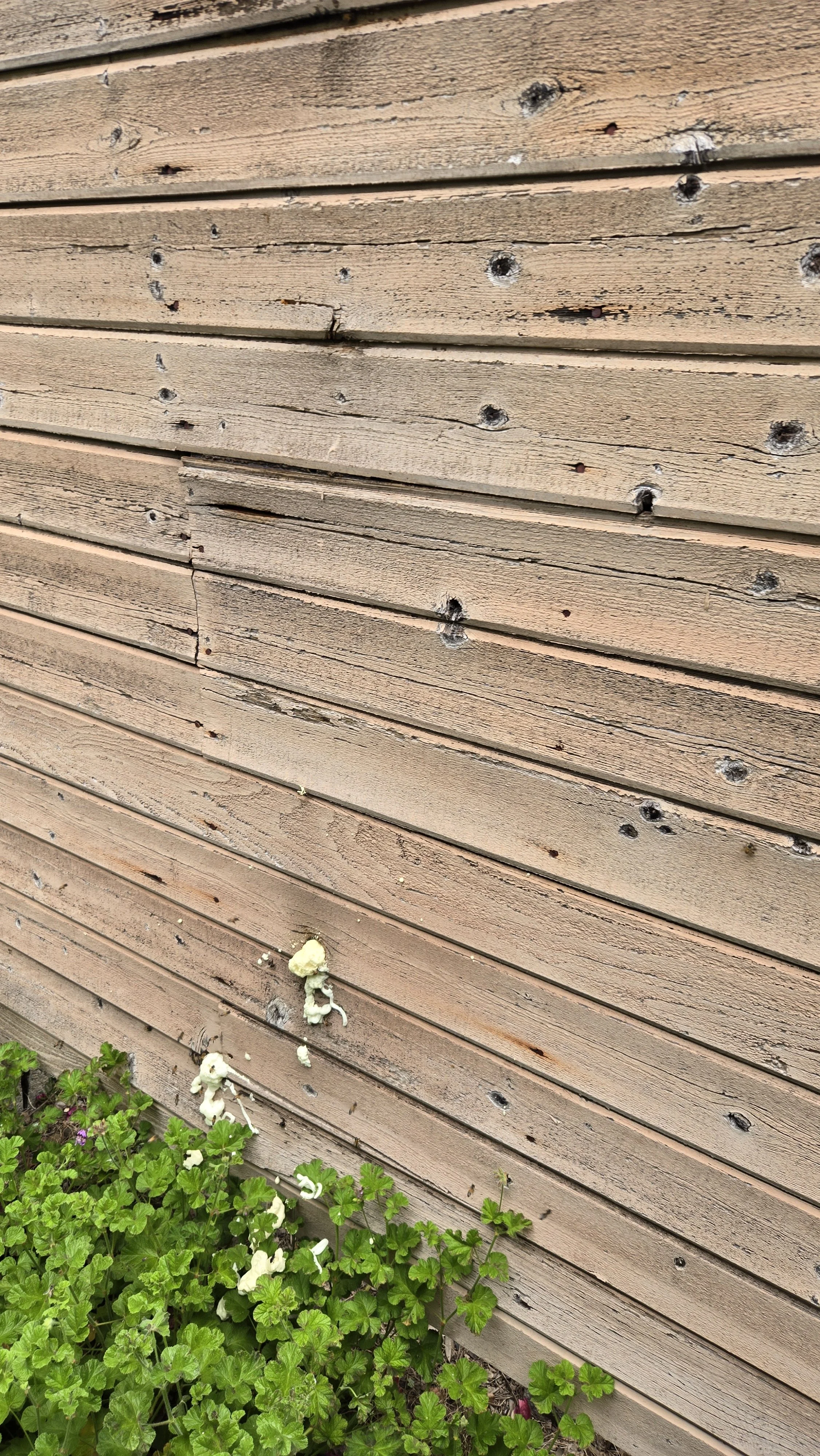
Whenever appropriate, we fill unnecessary open spaces so there is no longer a large cavity available for another colony to occupy.
Sealing Cracks and Entry Points
We inspect the area surrounding the original hive location and seal potential access points.
This may include:
Cracks in stucco
Gaps around construction materials
Openings around siding
Small exterior penetrations
Other areas where bees could enter
Installing Screen Barriers When Needed
Some openings require airflow or drainage but still need protection from bee entry.
In those situations, hardware cloth or appropriate screen material may be installed to allow the area to function properly while preventing access by bees.
Using Foam and Other Materials When Appropriate
Depending on the construction and location, foam may be used to fill specific gaps or cavities.
The correct repair method depends on the structure itself. Every home and hive location requires a different approach.
Why Leaving Honeycomb Behind Creates Future Problems
One of the biggest differences between a complete structural bee removal and a basic bee removal is what happens to the hive material after the bees are gone.
A honey bee colony builds comb for a reason.
The wax structure stores:
Honey
Pollen
Brood
Colony scent
Removing the bees but leaving the comb behind leaves the original hive environment inside your home.
Honey Can Damage Your Home
A mature colony may contain a significant amount of stored honey.
When temperatures rise, especially in walls, attics, and roof areas, honey can become soft and begin moving through the structure.
This can lead to:
Staining
Odors
Damage to drywall or insulation
Attracting insects and pests
Wax Can Melt Inside Walls
Wax is designed to protect honey while it is inside the hive, but it is not designed to remain inside a hot wall cavity indefinitely.
San Diego temperatures can create conditions where wax softens and shifts.
Removing the comb eliminates the risk of old hive material continuing to affect the home.
Brood Left Behind Can Decay
Brood comb contains developing bees.
If it remains after a colony is removed, the material eventually breaks down.
This can create:
Odors
Pest attraction
Unsanitary conditions inside the structure
A professional removal should address the entire hive—not just the adult bees.
Africanized Honey Bees and Structural Removals
Honey bees are an important part of our ecosystem, and whenever safely possible, Bee Dash Rescue focuses on live removal and relocation.
However, not every colony can be safely relocated.
San Diego County does have populations of Africanized honey bees, sometimes referred to as "killer bees." These bees are capable of becoming highly defensive and may pose a serious risk to people, pets, and neighbors.
During an inspection, we evaluate the behavior of the colony and determine the safest approach.
If a colony demonstrates dangerous defensive behavior that makes live removal unsafe, the priority becomes protecting people and animals from potential harm.
While live relocation is our preferred approach, safety must always come first.
Why Homeowners Should Not Wait to Remove a Structural Hive
One of the most common situations we encounter is a homeowner who notices bees but decides to wait.
Sometimes the bees seem manageable.
They may only see occasional activity at an entry point.
They may assume the colony will leave on its own.
Unfortunately, honey bee colonies are designed to grow.
A hive that remains undisturbed can become significantly larger over time.
I have seen homeowners wait years before addressing a hive. In one case, a homeowner left a colony alone for approximately six years. During that time, the colony grew and eventually swarmed, resulting in two massive separate hives located about ten feet apart.
A removal that could have been addressed earlier became a much larger project.
Delaying removal can mean:
More honeycomb
More honey stored inside the structure
Larger repairs
More difficult access
Greater potential for secondary problems
The best time to address a structural hive is when you first discover it.
Common Signs You May Have a Hive Inside Your Home
Many homeowners do not realize they have a structural hive until the colony is already established.
Signs may include:
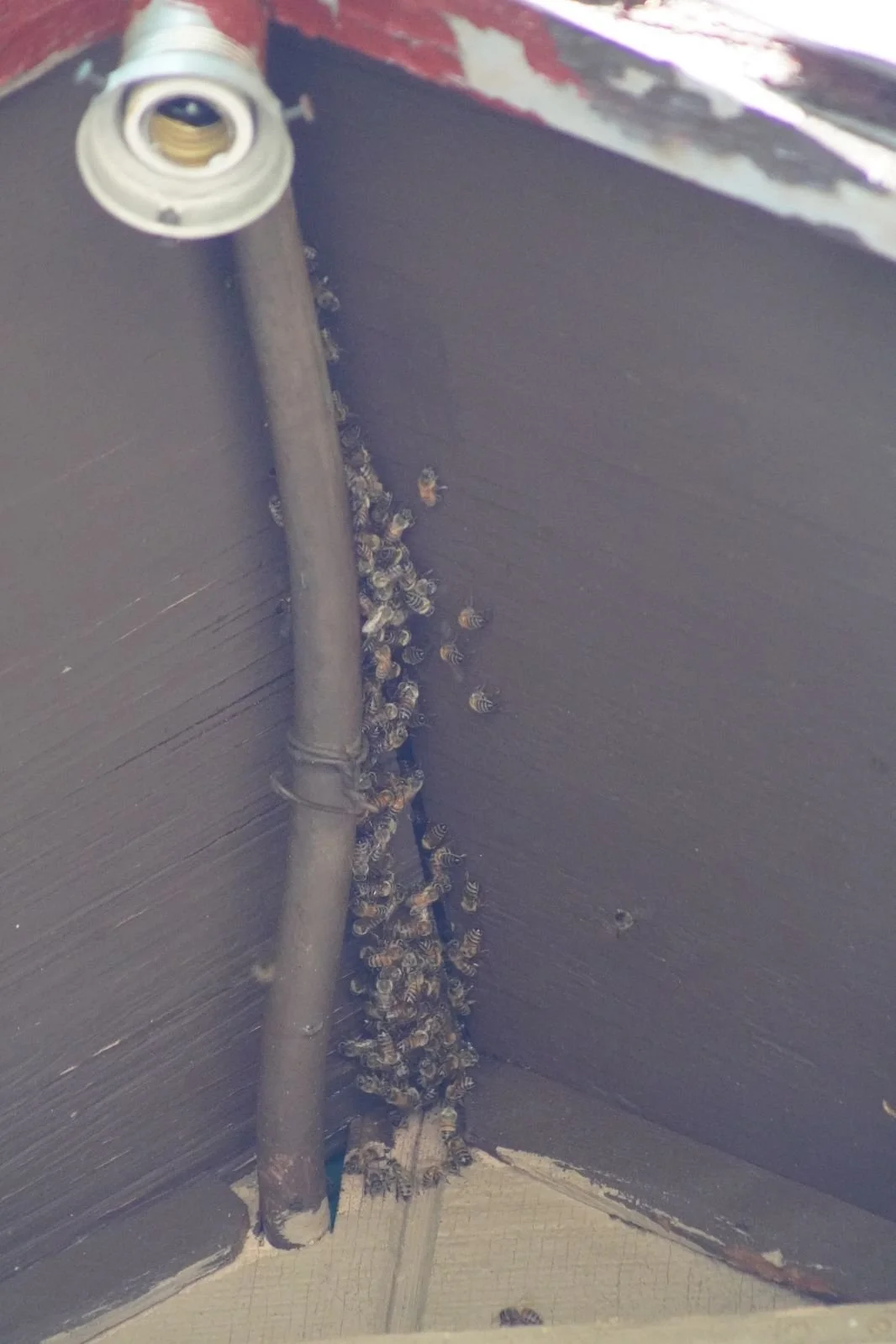
Consistent Bee Traffic at One Location
If bees repeatedly enter and exit the same crack, opening, or area of your home, there is a good chance they are accessing a nest site.
Buzzing Sounds Inside Walls
In quiet areas of the home, homeowners may hear buzzing coming from walls, ceilings, or enclosed spaces.
Increased Bee Activity During Warm Weather
Bee activity often increases when temperatures rise because colonies become more active.
Bees Appearing Inside the Home
Finding bees indoors near windows, lights, vents, or wall areas can indicate that a colony has established itself nearby.
Previous Swarm Activity
If a swarm has landed on your property or near your home, it may indicate that there are suitable nesting locations nearby.
Structural Bee Removal Locations We Commonly Handle
Bee colonies can establish themselves in many different areas of a home.
Some common locations include:
Bees Inside Stucco Walls
Stucco homes are common throughout San Diego County and often contain protected spaces where bees can build colonies.
Bees Inside Attics
Attics provide warmth, protection, and access points around vents or construction gaps.
Bees Behind Siding
Small openings behind siding can create ideal nesting cavities.
Bees in Roof Areas
Roof-related spaces can be difficult to access and require careful removal and repair.
Bees Inside Exterior Walls
Wall cavities are one of the most common structural hive locations because they provide the enclosed space bees naturally seek.
Why Choose Bee Dash Rescue for Structural Bee Removal?
A structural bee removal requires more than finding bees and taking them away.
It requires understanding the colony, the structure, and the repair process.
At Bee Dash Rescue, homeowners receive:
25 Years of Beekeeping and Construction Experience
Our background allows us to understand both the biology of honey bees and the construction of the homes where they build their colonies.
Live Removal When Safe and Possible
We specialize in preserving honey bee colonies whenever conditions allow.
Complete Hive Removal
We remove the bees, queen when possible, honeycomb, and remaining hive materials.
Professional Repairs
We can repair affected areas including:
Stucco
Drywall
Siding
Roof areas
Proper Bee-Proofing
We address the conditions that allowed the hive to form in the first place.
The result is a complete solution—not just a temporary fix.
Frequently Asked Questions About Structural Bee Removal
Homeowners often have many questions when they discover bees entering their home. Structural bee removal is different from a simple swarm capture because the colony has established itself inside the building.
The following are some of the most common questions we receive about removing bees from walls, attics, roofs, and other structures.
How much does structural bee removal cost?
The cost of structural bee removal depends on several factors because every hive location and home is different.
The biggest factors that affect the cost include:
How long the bees have been inside the structure
The size of the colony
The amount of honeycomb present
The location of the hive
How difficult it is to access the colony
The amount of repair required afterward
The level of bee-proofing needed
A newly established hive may be a relatively small removal, while a colony that has been inside a wall for several years can become a much larger project involving extensive honeycomb removal and structural repairs.
This is why one of the first questions we ask is:
"How long have the bees been there?"
That answer helps us understand what may be waiting behind the wall.
Can bees leave on their own?
Sometimes homeowners hope that bees will eventually leave on their own.
While swarms may move on when they are temporarily clustered, a colony that has moved into a wall, attic, or other protected structure usually does not leave voluntarily.
Once honey bees establish a hive, they have invested significant energy into building:
Wax comb
Honey stores
Brood areas
A protected nesting location
The colony has created a home.
Without intervention, it may continue growing inside the structure.
Why can't I just seal the hole where the bees enter?
Sealing the entrance without removing the hive can create additional problems.
If the colony is still inside, the bees may:
Search for another way into the home
Damage interior areas trying to escape
Leave behind honeycomb and honey
Continue attracting future bee activity
The visible entrance is only the doorway.
The actual problem is the colony inside the structure.
A proper removal requires removing the hive, cleaning the remaining materials, and then sealing the access point.
Do you kill the bees during removal?
Whenever safely possible, Bee Dash Rescue specializes in live bee removal and relocation.
Healthy honey bee colonies play an important role in our environment, and our goal is to preserve them whenever conditions allow.
During a live structural removal, we carefully remove the bees and honeycomb, capture the queen when possible, and relocate the colony to an appropriate location where it can continue to thrive.
However, not every colony can safely be relocated.
If bees display highly defensive behavior or create a danger to people or animals, safety becomes the priority. In those situations, removal methods may need to change.
How long does structural bee removal take?
The time required depends on the size and location of the hive.
A small, easily accessible colony may be removed relatively quickly.
A large colony inside a wall or difficult structural area may require significantly more time because the process involves:
Locating the hive
Opening the structure
Removing bees carefully
Removing all honeycomb
Cleaning the cavity
Applying scent treatment
Bee-proofing
Completing repairs
The goal is not to rush the removal.
The goal is to complete it correctly.
Will bees come back after removal?
A properly completed structural bee removal greatly reduces the chance of another colony returning to the same location.
However, prevention depends on properly addressing the original conditions that attracted the bees.
That is why Bee Dash Rescue focuses on:
Removing all honeycomb
Removing remaining wax
Applying scent-cover treatment
Filling unnecessary hive voids
Sealing entry points
Our six-month warranty covers the same hive void, even if bees attempt to use a different entry point into that same cavity.
The warranty does not cover a completely new hive location unless additional areas were specifically requested to be bee-proofed.
Can you repair the wall after removing the hive?
Yes.
This is one of the biggest advantages of choosing Bee Dash Rescue.
Many bee removal companies remove the colony but leave homeowners responsible for finding another contractor to repair the damage.
Because of our residential construction background, we can handle many of the repairs required after structural removal.
Repairs may include:
Drywall repair
Stucco texture matching
Siding repair
Roof repairs
Our goal is to provide a complete solution from removal through restoration.
What happens if honeycomb is left inside the wall?
Leaving honeycomb behind can create ongoing problems.
Old hive material can lead to:
Melting honey
Wax damage
Odors
Decaying brood
Wax moth activity
Attraction of future swarms
A professional structural bee removal should remove the entire hive—not just the bees.
Do you use chemicals to remove bees?
Our focus is live bee removal whenever possible.
Rather than relying on extermination methods, we use a careful removal process designed around preserving the colony when conditions allow.
The approach depends on:
Bee behavior
Hive location
Safety considerations
Structural conditions
Every removal is evaluated individually.
What areas do you provide structural bee removal services?
Bee Dash Rescue provides structural bee removal throughout San Diego County, including:
San Diego
La Jolla
Carmel Valley
Del Mar
Rancho Santa Fe
Encinitas
Carlsbad
Oceanside
Vista
San Marcos
Escondido
Poway
Rancho Bernardo
Chula Vista
Surrounding San Diego communities
Schedule Professional Structural Bee Removal in San Diego
Finding bees inside your home can be stressful, especially when you do not know how large the hidden hive may be or what damage may already exist behind the wall.
The longer a colony remains inside a structure, the more opportunity it has to grow.
At Bee Dash Rescue, we provide professional live structural bee removal backed by decades of beekeeping experience and residential construction knowledge.
We don't just remove the bees.
We remove the hive, protect your home, repair the damage, and help prevent the problem from happening again.
If you have bees entering your wall, attic, roof, or another structural area, contact Bee Dash Rescue for a professional evaluation.