

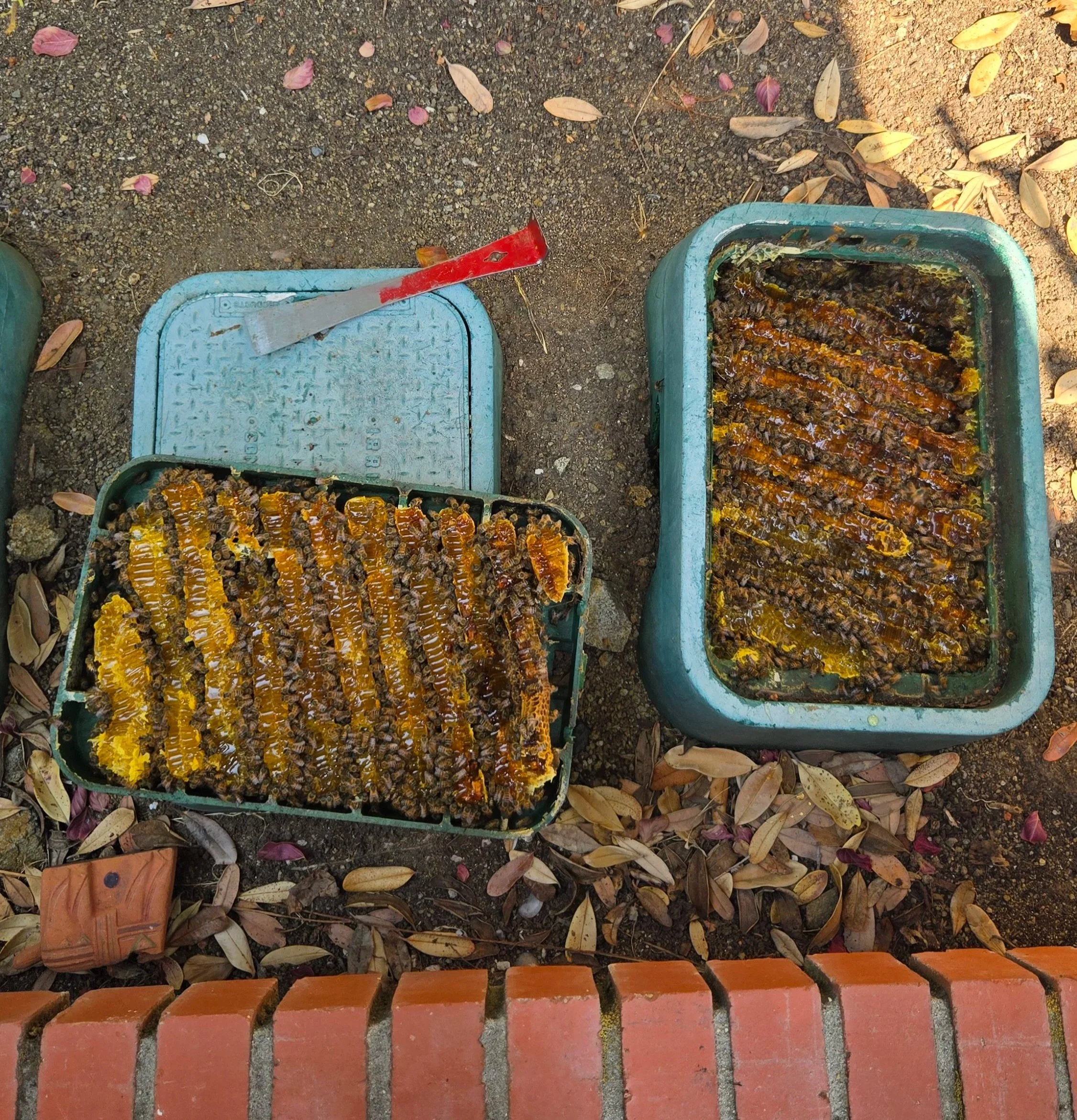
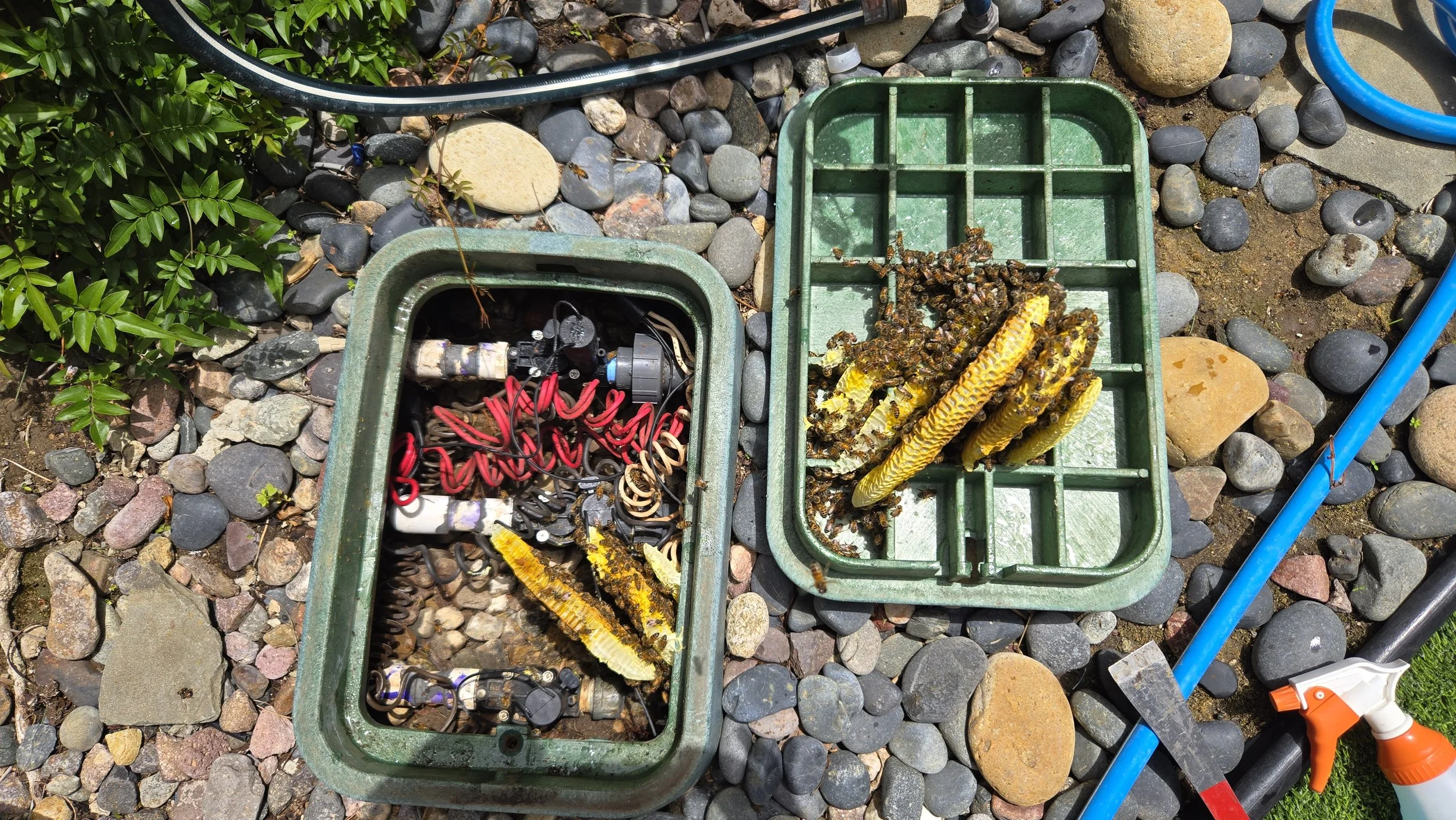
A side by side comparison of hives that were built in a valve box. The one on the left has been there for a few years. The one on the right has been only a few weeks.
How Fast Can Bees Build a Hive? Why Waiting Could Cost You Thousands
A swarm of honey bees can appear almost overnight. One day your yard is quiet, and the next there's a basketball-sized cluster of bees hanging from a tree branch or gathering near your home. A day or two later, they're gone. Many homeowners breathe a sigh of relief, assuming the bees simply flew away.
Unfortunately, that's not always what happened.
In many cases, the bees have simply found a more permanent home—inside your walls, attic, chimney, or another hidden space in your house. Once they move in, they waste very little time getting to work. At Bee Dash Rescue, we've removed colonies that began as a small swarm and eventually grew into massive hives filling entire wall cavities with comb, honey, and tens of thousands of bees.
One of the most common questions we hear is, "How fast can bees build a hive?" The answer surprises most homeowners.
Honey Bees Begin Building Almost Immediately
Honey bees are remarkably efficient. Once a swarm chooses a permanent nesting site, construction begins within hours. Worker bees start producing beeswax from glands on the underside of their abdomen and use that wax to build the first sections of honeycomb.
Those first pieces of comb are essential to the colony's survival. They provide a place for the queen to lay eggs, allow workers to store pollen and nectar, and create the nursery where the next generation of bees will develop.
Unlike many animals that spend days or weeks settling into a new home, honey bees arrive ready to build. Every hour counts because the colony must establish itself before weather, predators, or food shortages threaten its survival.
A Small Swarm Can Become a Large Colony Faster Than You Think
Although the first day is focused on building comb, the pace quickly accelerates. As soon as enough brood comb is available, the queen begins laying eggs. Within about three weeks, the first generation of new worker bees emerges, dramatically increasing the colony's workforce.
Those new workers immediately begin collecting nectar, gathering pollen, caring for developing brood, defending the hive, and expanding the honeycomb. As more bees hatch, the colony grows exponentially.
During Southern California's spring bloom, when flowers are abundant throughout San Diego County, colonies can expand at an incredible rate. Warm weather and plentiful nectar allow bees to devote nearly all of their energy to raising young and building their new home.
What started as a temporary swarm can become a well-established colony in just a matter of weeks.
Why Homes Make Perfect Bee Habitat
Many people imagine honey bees naturally living only in hollow trees, but modern neighborhoods often provide even better nesting sites.
The walls of a home offer dry, protected cavities with stable temperatures that closely resemble the natural environments honey bees seek. Small openings around roof vents, plumbing penetrations, cracked stucco, attic vents, and expansion joints give scout bees easy access to these hidden spaces.
Once a swarm discovers one of these cavities, it rarely continues searching. The colony moves in and begins building immediately.
This is why Bee Dash Rescue frequently removes hives from inside stucco walls, attics, chimneys, garages, block walls, irrigation valve boxes, and other concealed locations throughout San Diego County.
The Longer Bees Stay, the Bigger the Problem Becomes
One of the biggest misconceptions homeowners have is believing a colony will eventually leave on its own.
While a swarm resting on a tree branch may relocate after a day or two, an established colony has no reason to abandon a safe home. Honey bees invest enormous amounts of energy building wax comb, raising brood, and storing honey. Once those resources are in place, they remain committed to that location unless something forces them out.
As the colony grows, so does the amount of honeycomb hidden inside your home. Over months or years, that comb can fill large wall cavities. Honey accumulates, brood expands, and the number of bees increases into the tens of thousands.
At Bee Dash Rescue, we've removed colonies that had been quietly growing inside homes for years. In many cases, homeowners didn't realize the extent of the infestation until honey began leaking through drywall or bees started entering living spaces.
The longer a colony remains undisturbed, the more extensive the removal and repairs often become.
Recognizing the Signs of an Established Hive
A temporary swarm and an established colony behave very differently.
A swarm usually forms a single cluster while scout bees search for a permanent location. Activity is relatively calm, and the bees often leave within a day or two.
An established colony, however, creates a constant flow of traffic. You'll notice bees entering and leaving the same opening throughout the day. Some return carrying bright yellow or orange pollen on their legs, while others leave in search of nectar and water. On quiet evenings, you may even hear a faint buzzing behind drywall or in your attic.
These are strong indications that the bees have already begun building a permanent hive.
Why Professional Removal Shouldn't Wait
Every week that passes allows the colony to expand. More comb is built, more honey is stored, and more brood is produced. Eventually, removing the hive requires opening larger sections of the structure simply because there's more material to remove.
There's another important reason not to delay. Simply eliminating the bees without removing the honeycomb rarely solves the problem. The remaining wax, honey, and pheromones continue attracting other bees, while leftover honey often draws ants, rodents, wax moths, and other pests.
Complete hive removal means removing the bees, the honeycomb, accessible honey, and treating the area to reduce the scent that attracts future swarms.
How Bee Dash Rescue Locates Hidden Colonies
Finding the exact location of a hidden hive is one of the most important parts of the removal process.
Bee Dash Rescue uses thermal imaging technology to help identify the warm brood area inside walls and other structures. Because honey bees carefully regulate the temperature around developing brood, active colonies often produce a detectable heat signature. This allows us to locate the hive more accurately and minimize unnecessary damage during removal.
Our background in residential construction also allows us to plan repairs before the hive is opened. With more than 25 years of experience in both beekeeping and construction, we understand how homes are built and how to access colonies while preserving as much of the structure as possible.
The Bottom Line
Honey bees are extraordinary builders. Once they choose a permanent nesting location, construction begins almost immediately. Within hours they are producing wax. Within days they are expanding honeycomb. Within weeks the queen is raising a new generation of workers, and the colony is well on its way to becoming a permanent fixture inside your home.
If you've noticed bees consistently entering the same area of your house, don't assume they'll eventually move on. By the time a colony is obvious from the outside, it has often been growing for weeks or even months.
Early intervention almost always results in a simpler removal, less structural damage, and lower repair costs.
If you're unsure whether the bees on your property are simply resting or have already begun building a hive, Bee Dash Rescue provides professional live bee removal, complete honeycomb removal, bee-proofing, and structural repairs throughout San Diego County. Our goal is to safely relocate healthy honey bee colonies while protecting your home from long-term damage.
Frequently Asked Questions
How quickly can honey bees build a hive?
Honey bees typically begin producing wax and building honeycomb within hours of moving into a permanent nesting site. Construction starts almost immediately because the colony depends on comb to store food and raise young.
Can a bee swarm become a hive overnight?
Yes. A swarm can move into a wall or attic in a single day and begin building comb that same day. While the hive is initially small, it grows quickly under favorable conditions.
Will bees eventually leave after building a hive?
In most cases, no. Once honey bees establish a colony inside a structure, they rarely abandon it on their own.
How do I know if bees have moved into my house?
If you see bees entering and leaving the same opening throughout the day, hear buzzing inside a wall, or notice activity continuing for several days, the bees have likely established a colony.
Why should a hive be removed early?
Smaller colonies are generally easier to remove and cause less structural damage. Waiting allows the hive to grow larger, making removal and repairs more extensive.