

Will Bees Leave on Their Own? What San Diego Homeowners Need to Know
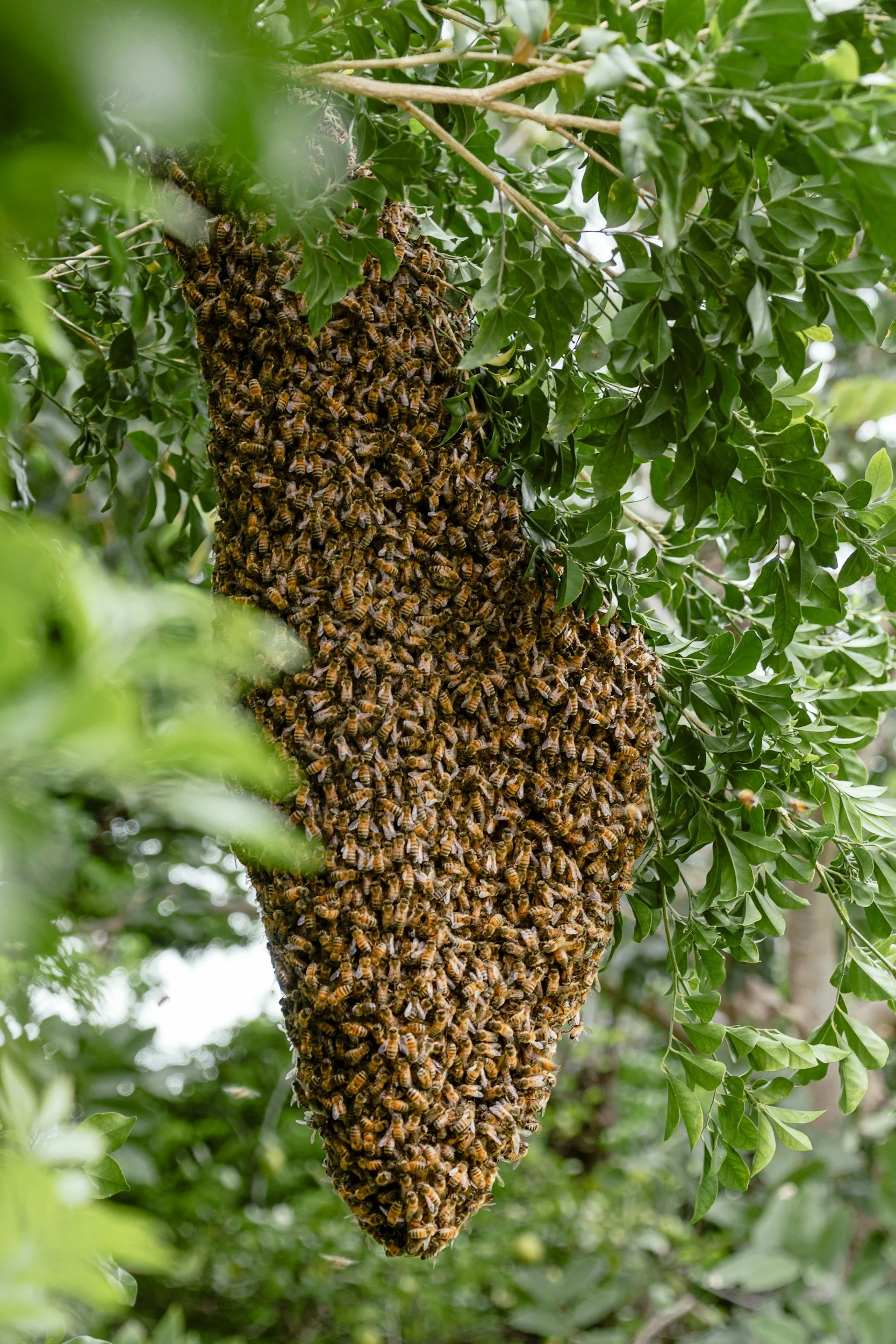
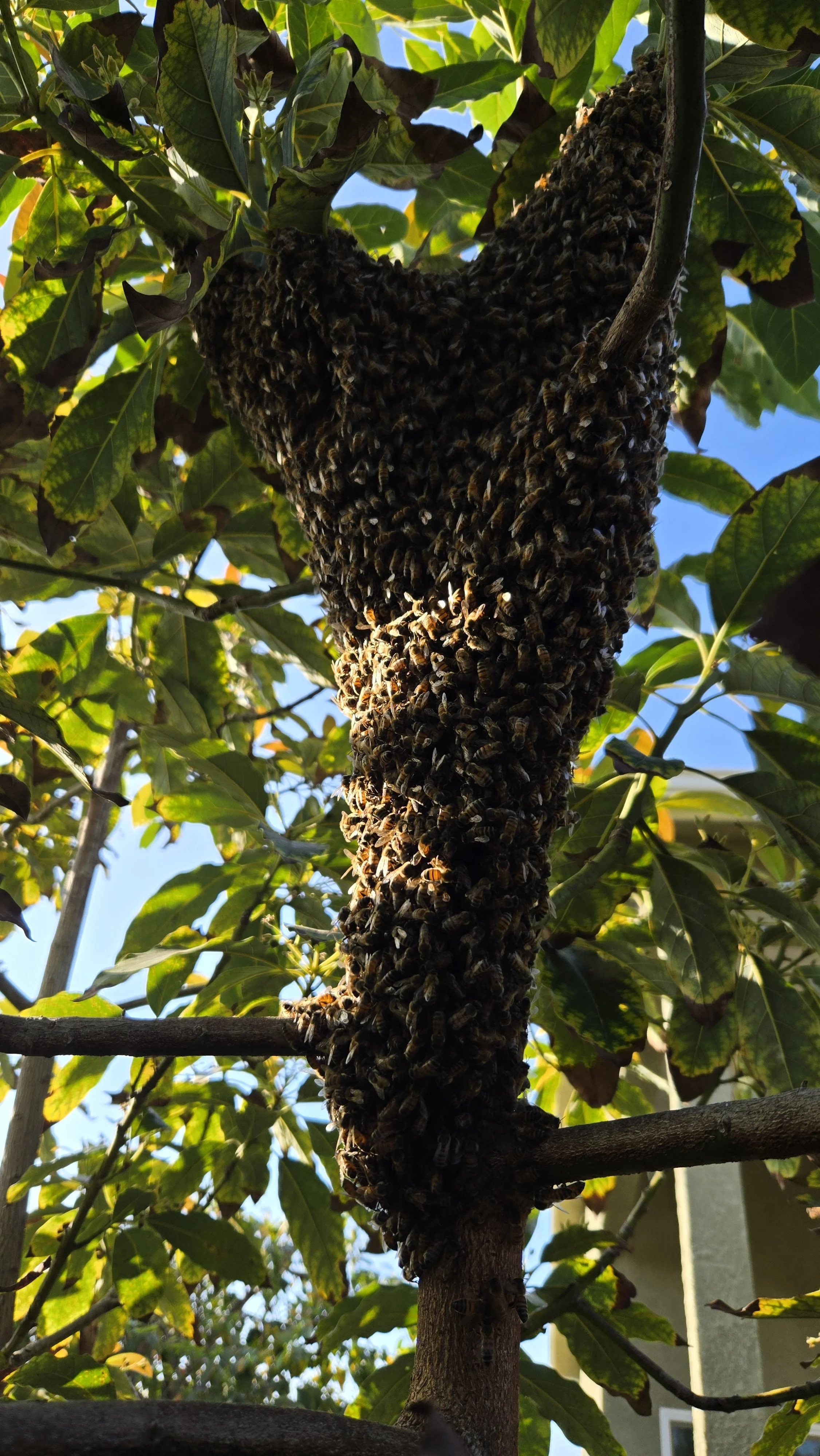
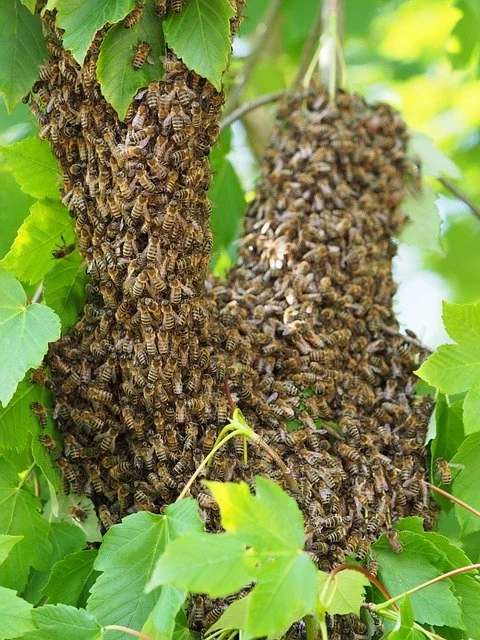
Many San Diego County home owners are taken by surprise when they see thousands of bees flying around their house and clump together on a tree or under their eve. The first question always is, “Will they leave on their own?”. The answer depends. In the two scenarios above, if they are landing on the tree then usually they are still swarming and only searching for a permanent home but if they are landing under the eve, it indicates that they may have found a home and they will all move into your wall or roof cavity within a few hours.
If It's a Bee Swarm, They May Leave on Their Own
A honey bee swarm is nature's way of creating a new colony. When a hive becomes crowded, the old queen leaves with thousands of worker bees to find a new home. During this process, the bees often cluster on:
Tree branches
Bushes
Fences
Patio furniture
Vehicles
Roof edges
Most swarms remain in one place for only a few hours to a few days while scout bees search for a permanent nesting location. Once the colony agrees on a new home, the entire swarm leaves together. In these situations, bees may indeed leave on their own. However, there is one important problem. Sometimes the "new home" they choose is your house.
If Bees Move Into Your Walls, They Usually Will Not Leave
This is the risk of a more extensive removal that can include opening the house wall or roof and then having to repair it.
If you notice bees:
Flying into a hole in the stucco
Entering the roofline
Going behind siding
Flying into a vent
Entering a block wall
Coming and going from the same location all day
There's a good chance they have already established a colony. Once bees begin building wax comb and storing honey inside a structure, they generally do not abandon it voluntarily. A healthy colony can live in the same location for years. And, the longer they remain, the larger the hive becomes.
How Fast Can Bees Build a Hive?
Much faster than most people realize. Worker bees can begin building comb within hours after moving into a new cavity. Once the queen starts laying eggs, the colony grows rapidly.
Over time, a hidden colony may contain:
Tens of thousands of bees
Up to one hundred pounds of honeycomb
Large amounts of stored honey
What starts as a small swarm can eventually become a major structural problem.
Why Some Swarms Don't Leave
Most swarms relocate within one to three days. However, if scout bees find a suitable cavity nearby, they may quickly move into:
Attics
Chimneys
Stucco walls
Irrigation boxes
Sheds
Block walls
Roof systems
Research from university extension programs shows that honey bees naturally seek enclosed cavities that resemble hollow trees—their preferred nesting environment. Unfortunately, many homes in San Diego provide perfect nesting sites.
How Can You Tell If Bees Will Leave?
It's Probably a Temporary Swarm If:
The bees are hanging in a cluster.
They've only been there for a day or two.
You don't see them entering a hole.
There is little flight activity.
It's Probably an Established Hive If:
Bees are entering and exiting the same opening.
Activity continues all day long.
You hear buzzing in the wall.
The bees have been present for more than a few days.
You see bees carrying pollen.
Should You Wait and See?
Sometimes waiting works. Sometimes it becomes a much bigger and more expensive problem. As professional bee removal specialists throughout San Diego County, we've responded to countless calls where homeowners hoped the bees would leave on their own—only to discover months later that a large colony had formed inside their walls. The earlier a colony is identified, the easier it is to remove and the less damage it typically causes.
What Should You Do If You Find Bees?
If it's a swarm in a tree, you may choose to monitor it for a day or two, as many swarms naturally move on. If the swarm is near children, pets, or an entryway, It's best to have it professionally relocated.
If bees are entering your home or a structure:
Do not wait. Established colonies almost never leave on their own and generally continue growing until they are professionally removed.
Live Bee Removal Throughout San Diego County
At Bee Dash Rescue, we specialize in live bee removal and colony relocation throughout San Diego County. Using thermal imaging and over 25 years of beekeeping and residential construction experience, we safely remove bees from walls, roofs, attics, and other structures while minimizing damage to your home.
If you're wondering whether the bees on your property will leave on their own, we're happy to help identify the situation and recommend the safest solution. Fill out our contact form and include photos to help identify where the bees are.
Frequently Asked Questions
How long will a bee swarm stay?
Most swarms leave within a few hours to a few days while searching for a permanent home.
Will bees in my wall leave on their own?
Usually no. Once bees establish a colony and begin building comb, they rarely abandon it.
Can I spray the bees myself?
DIY sprays never work. There is a tiny entrance and thousands of bees deep inside the cavity. It only kills the ones near the entrance and make bees defensive, which means they may start stinging when walking near the hive.
How do I know if bees are nesting in my house?
Look for bees repeatedly entering the same hole, buzzing sounds inside walls, or increased bee traffic around your home.
Is it better to remove bees sooner?
Yes. Early removal usually means a smaller colony, less structural damage, and lower repair costs.