

Why Bees Keep Coming Back to the Same Spot — And How to Stop It
Why Bees Keep Coming Back to the Same Spot — And How to Stop It
One of the most common frustrations we hear from San Diego homeowners is some version of this: "We already had bees removed from that wall two years ago. Now they're back in the exact same place." If this has happened to you, there's a specific, well-understood reason — and it's almost always preventable with the right removal process.
The Pheromone Signal
Honey bees communicate through chemical signals called pheromones. When a colony builds a hive inside a structure, they deposit pheromone compounds throughout the wax comb they produce. These signals serve as internal communication tools for the colony — but they also persist in the environment long after bees are gone.
Beeswax is a remarkably stable material. It doesn't decompose quickly, it absorbs into surrounding wood and drywall, and the pheromone compounds it carries remain detectable to other bees for months to years. When a swarm's scout bees are evaluating potential nesting sites — a task they carry out by investigating openings in structures throughout a neighborhood — they are specifically detecting these chemical signals. A cavity that smells like an established bee hive is being advertised, from the bees' perspective, as a proven, successful nesting location. Scouts report back positively, and the new swarm moves in.
This is why bees return to the same spot so reliably. It's not random. They are being drawn back by a persistent chemical invitation that previous occupants left behind.
The Two Failure Modes That Cause Repeat Infestations
Recurring bee infestations at the same location almost always trace back to one of two incomplete removal steps:
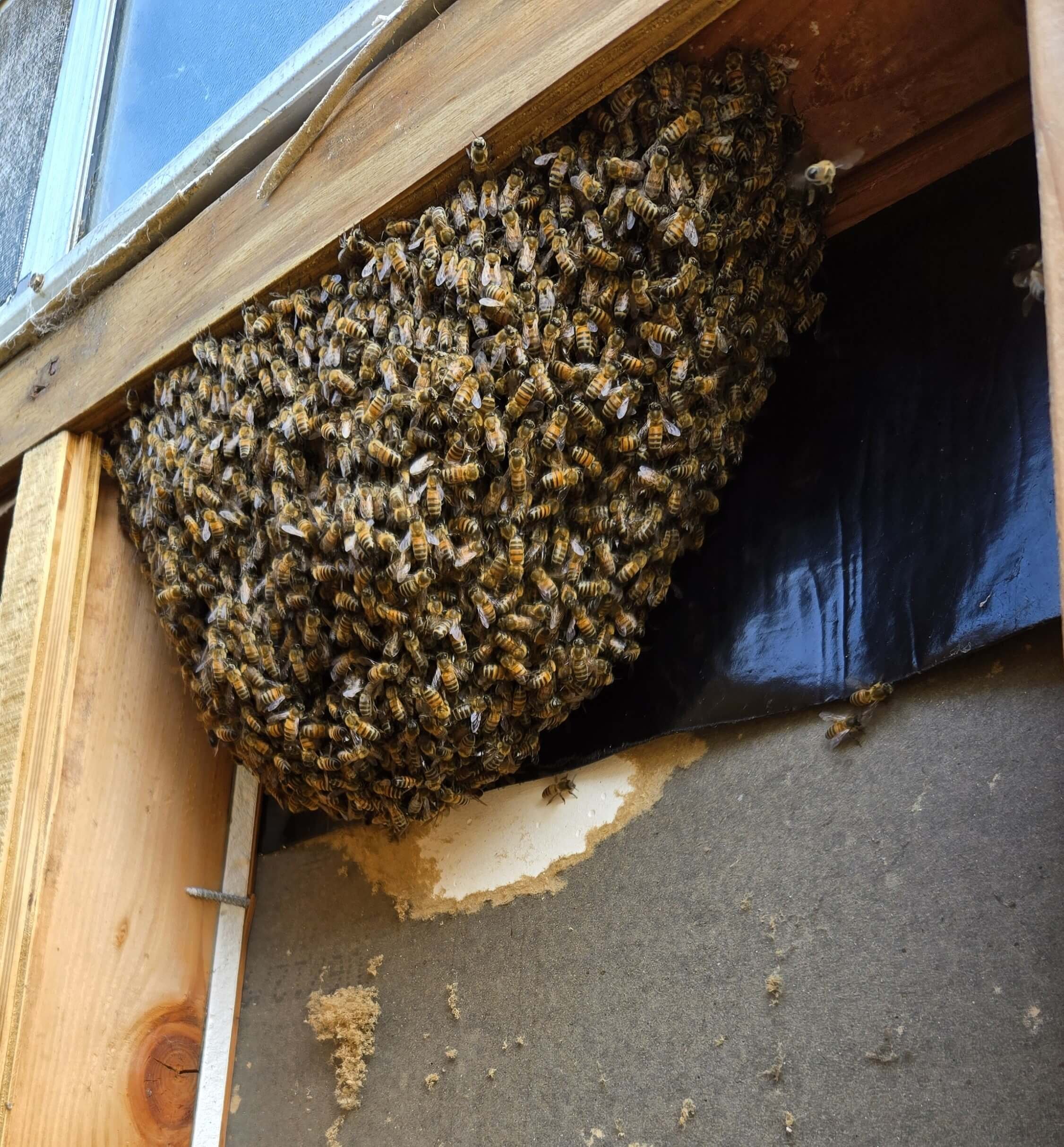
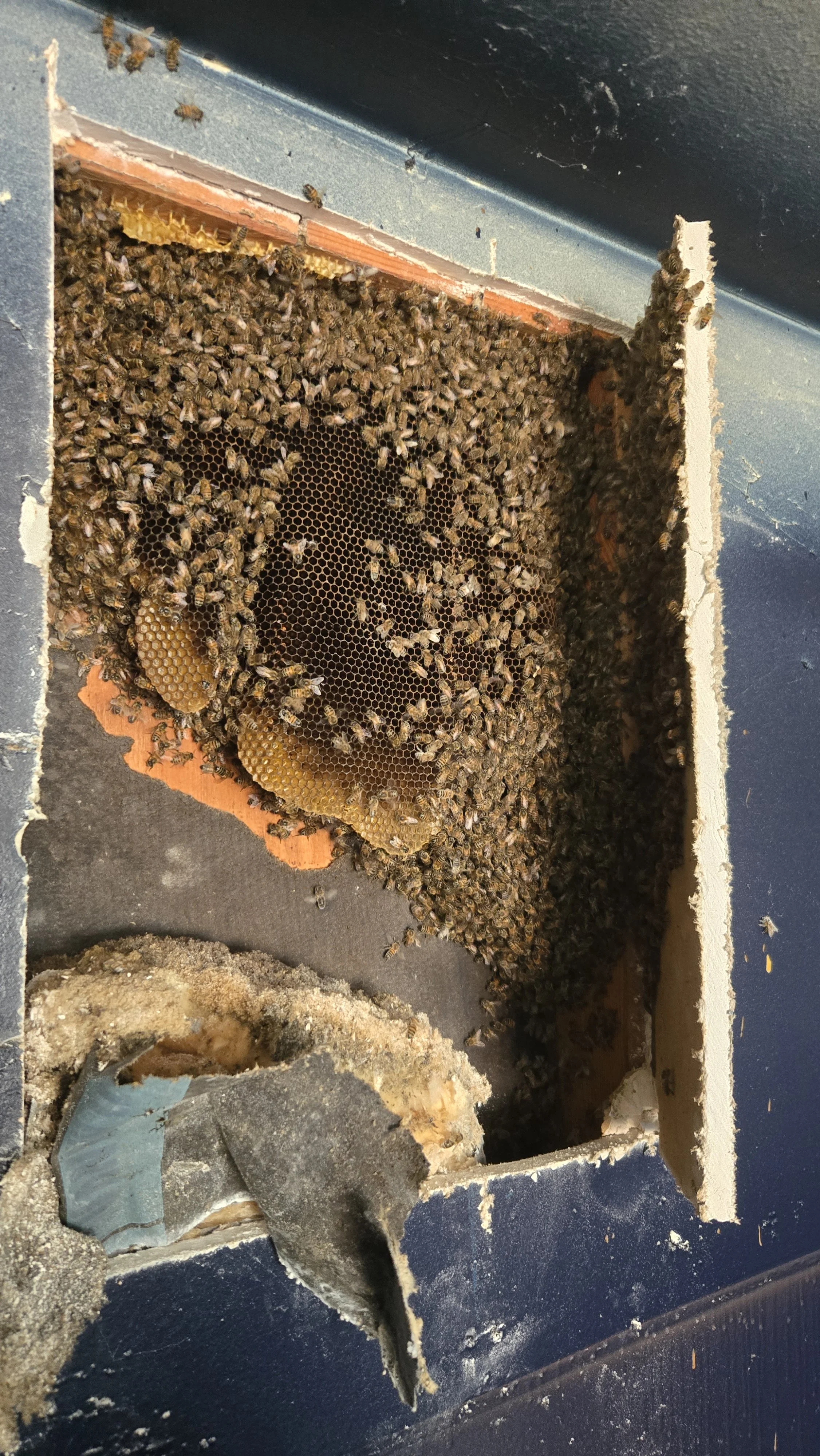
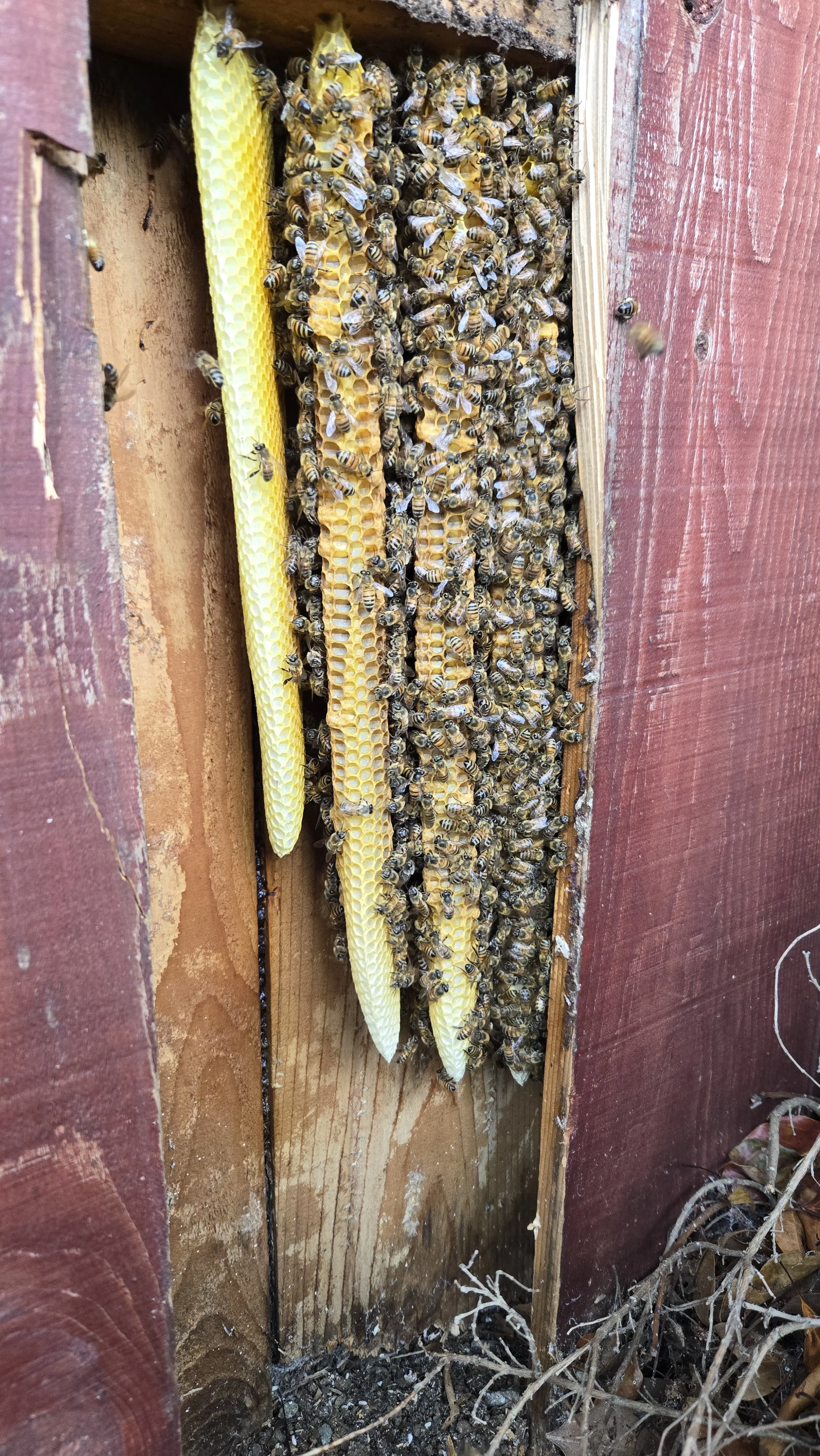
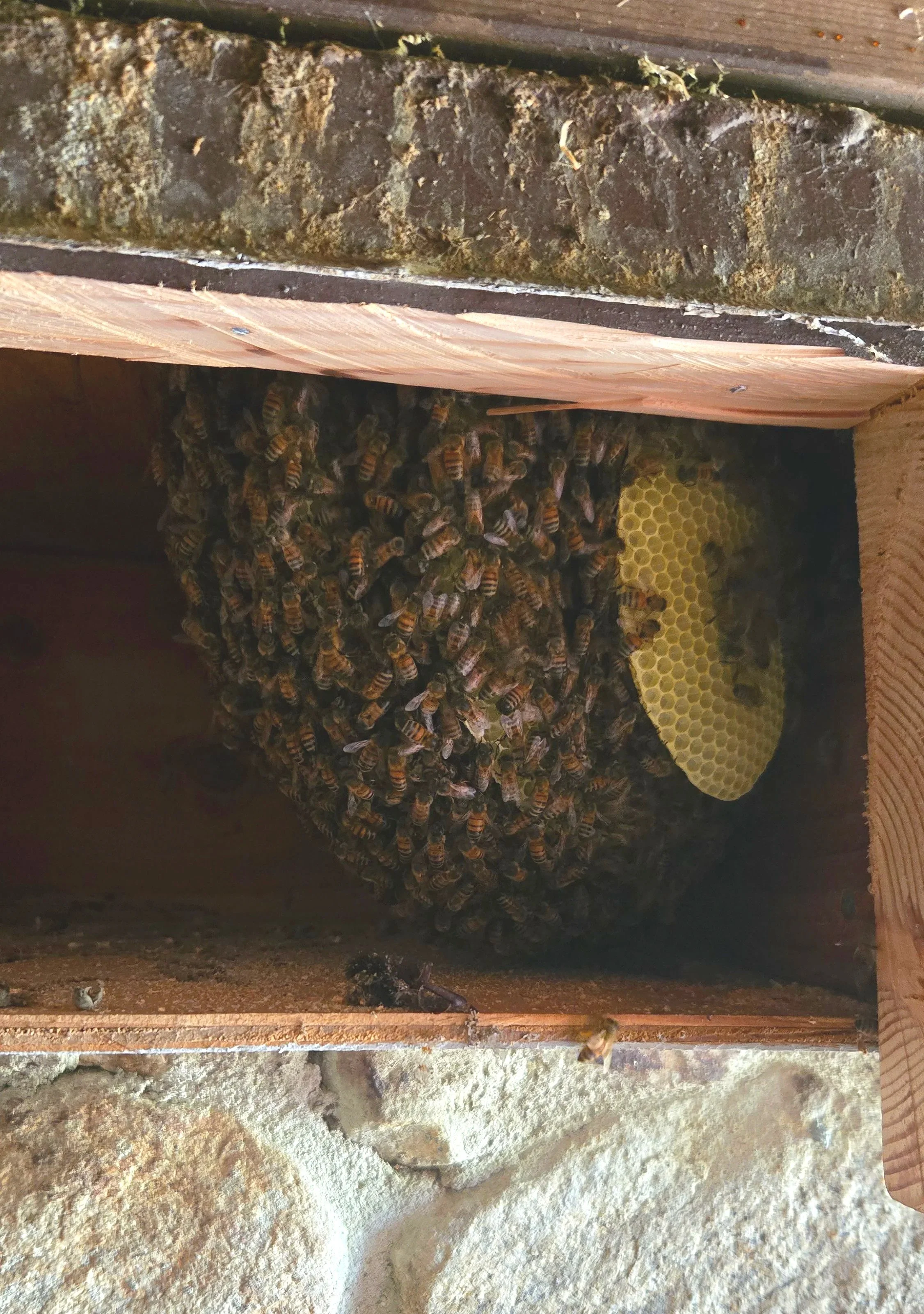
The honeycomb was left inside the structure. This is the most common cause of recurrence. Some removal providers — particularly pest control companies that use extermination rather than live removal — kill the bees but leave the comb and honey inside the wall. The dead bees dry out and the honeycomb remains, saturated with pheromones and eventually beginning to melt and ferment. Within one or two swarming seasons, new scout bees find the opening, detect the comb scent inside, and the cycle begins again.
The entry point was not properly sealed. Bees returned to a previous hive site but couldn't get back in through the original entry point — so they don't return. That logic only holds if the entry point is genuinely sealed. Partial sealing, caulk that shrinks and gaps over time, or simply blocking the most visible gap while leaving adjacent gaps open all allow new swarms to find their way back to the same cavity.
What a Complete Removal Looks Like
A removal that stops recurrence requires three things done in combination: full extraction of the live colony, complete removal of all honeycomb and hive material from the cavity, and treatment of the cavity interior to neutralize residual pheromone compounds before the entry point is sealed.
The pheromone treatment step is one that many providers skip — it's not visible, it takes additional time, and homeowners can't easily verify whether it was done. But it's the difference between a cavity that smells like old wax to the next scout bee and one that smells neutral. We include this step in every removal.
Bee-Proofing as Prevention
After any hive is removed, the entry point that bees used to access the cavity must be properly sealed. We include this as part of every removal we do. For homeowners who want to go further — particularly those on canyon edges, near open space, or in neighborhoods with historically high swarm activity — a broader bee-proofing inspection can identify other potential entry points around the home that could attract future swarms even after the current hive location is resolved.
A broader inspection looks at the full roofline, soffit and fascia condition, utility penetrations in stucco, weep screeds, attic vent covers, and any other openings larger than about a quarter inch. Sealing these proactively in early spring — before peak swarming season — is the most effective preventive measure a homeowner can take.
If Bees Have Already Returned
If you've had a previous removal done and bees have appeared in the same location, the first question to ask is whether the original honeycomb was removed. If it wasn't — or if you don't know — the answer is almost certainly that it needs to be done now, along with proper entry-point sealing and cavity treatment.
Call us at 619-800-8521 or fill out our free quote form. We can assess your specific situation and give you a clear explanation of what was likely missed in the previous removal and what the complete solution looks like. We back all of our removals with a 6-month warranty — if bees return to the same point we removed from within six months, we come back. We serve all of San Diego County including Scripps Ranch, Rancho Peñasquitos, La Mesa, Rancho Santa Fe, and Point Loma.