

How to Tell the Difference Between a Bee Swarm and an Established Hive
How to Tell the Difference Between a Bee Swarm and an Established Hive
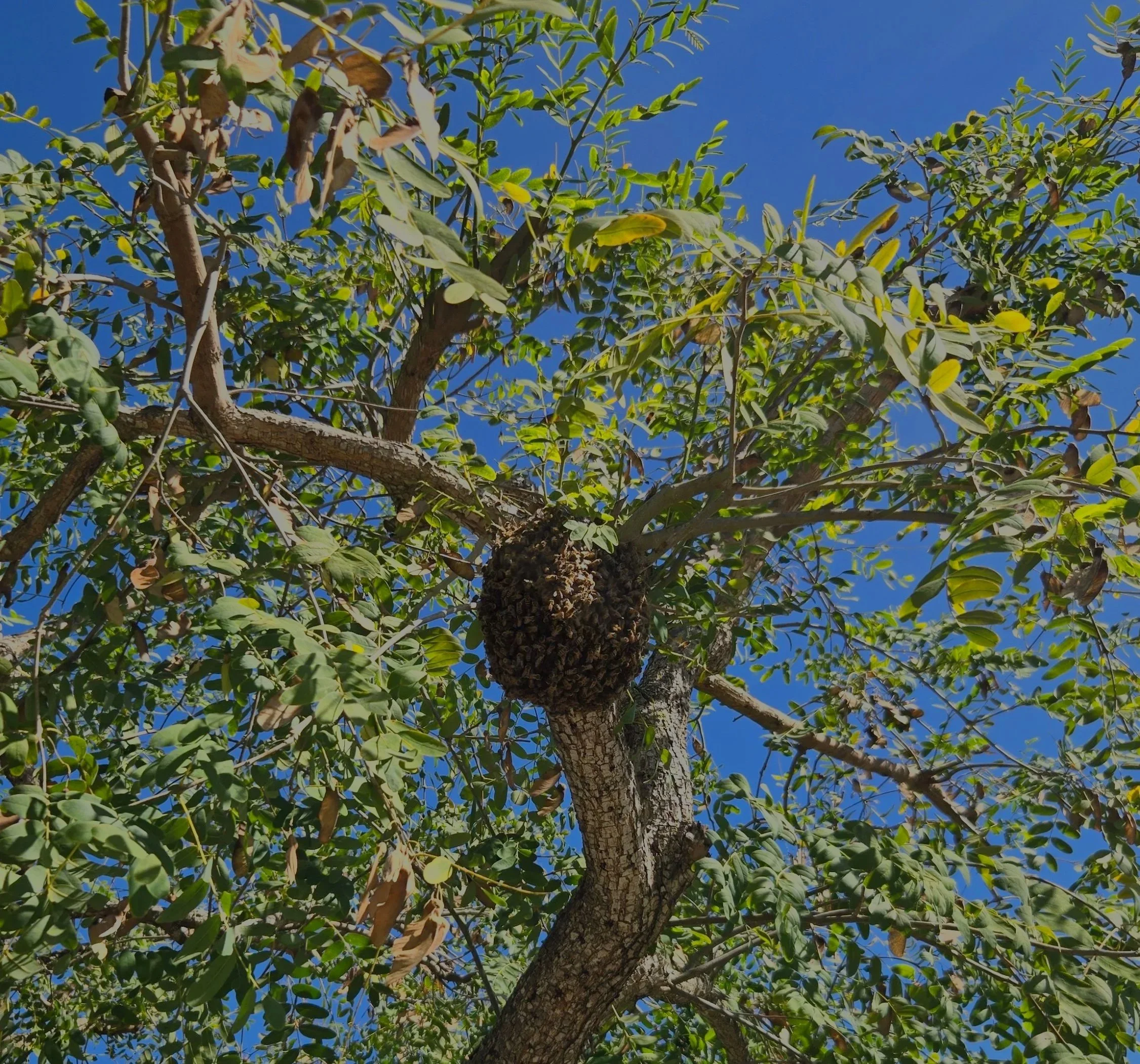
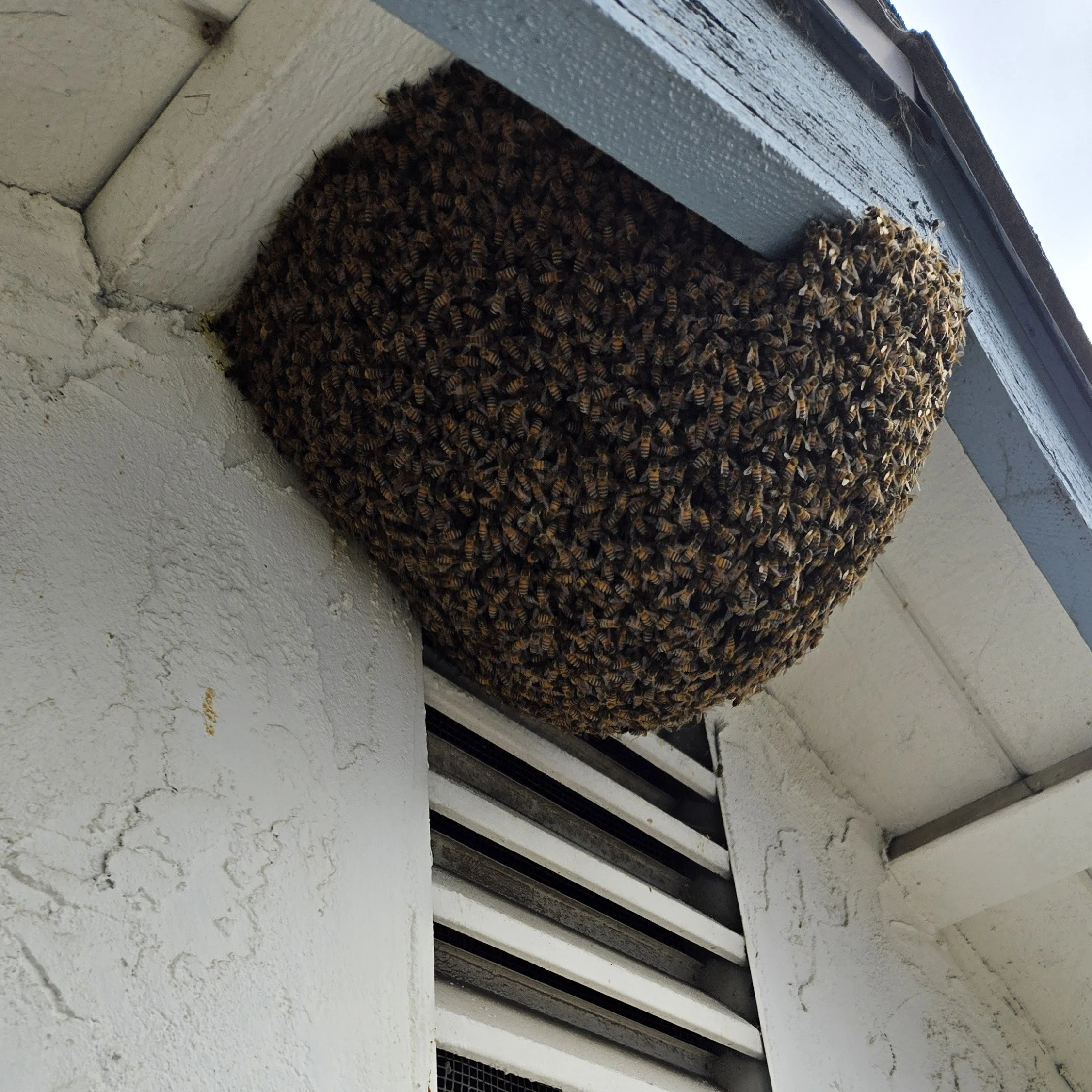
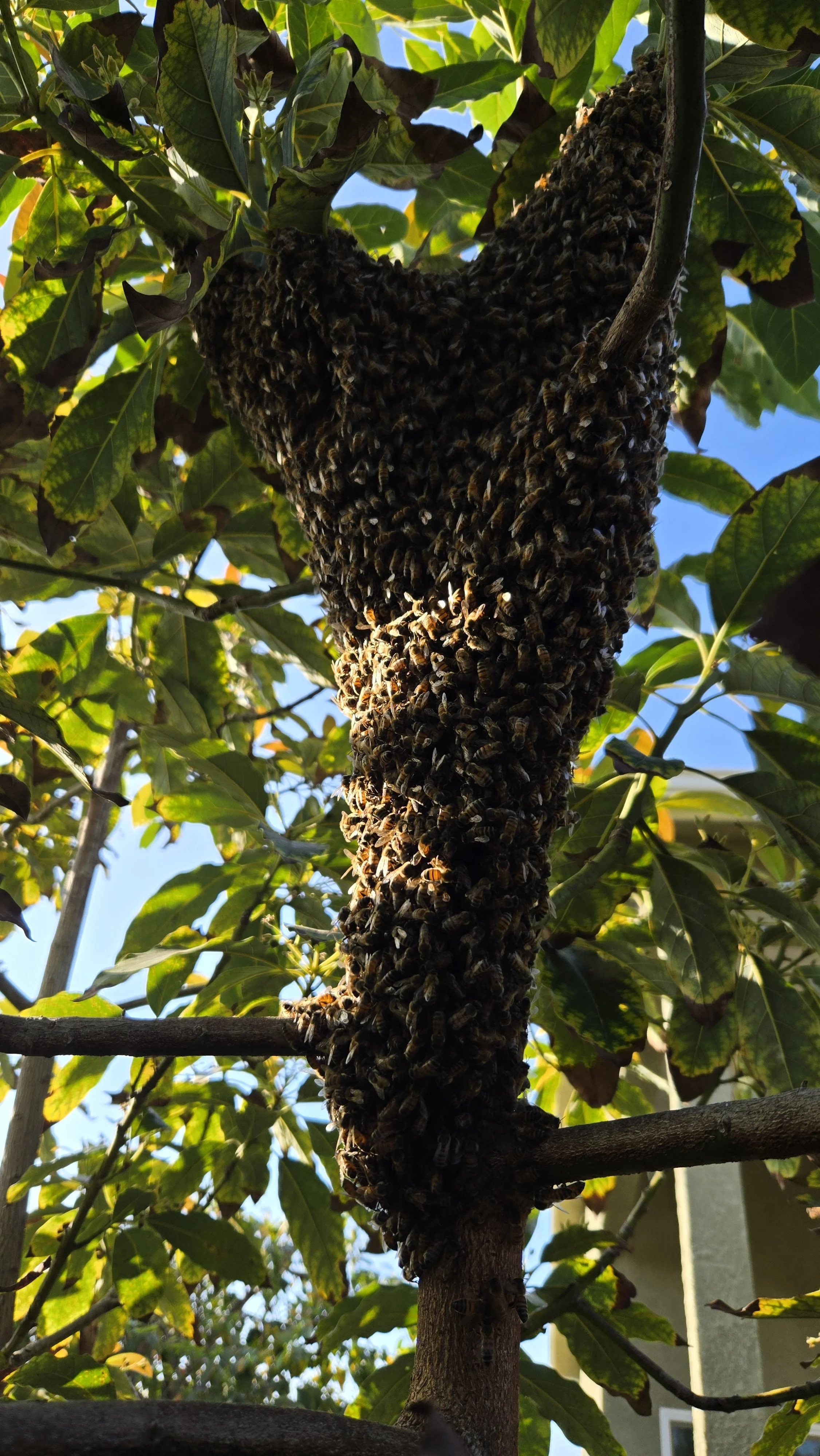
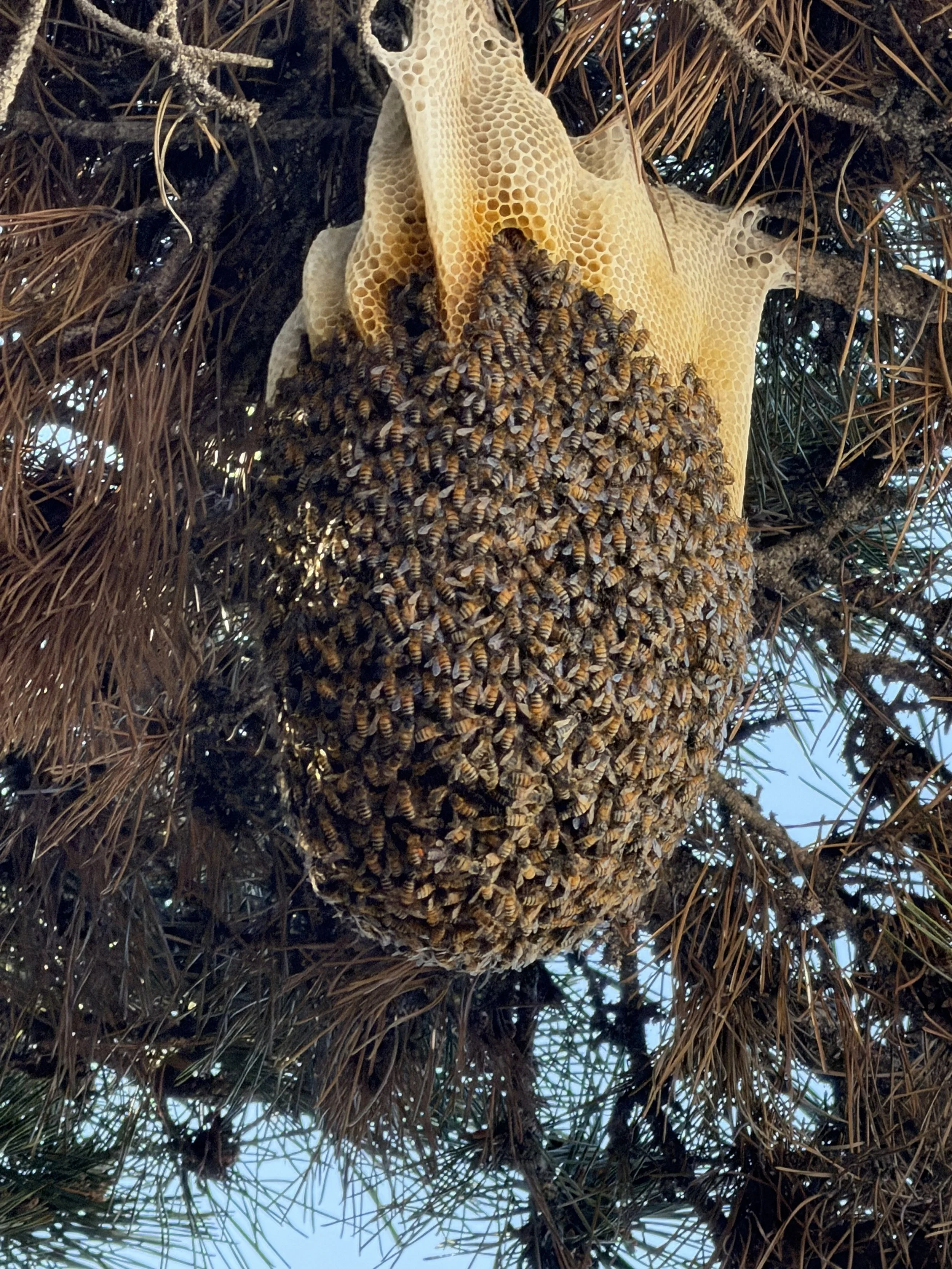
When San Diego homeowners call us about bees on their property, the first thing we try to determine is whether they're dealing with a swarm or an established hive. These are two fundamentally different situations — they look different, behave differently, pose different levels of urgency, and require different removal approaches. Knowing which one you have helps you understand what to expect and how quickly to act. Two of the photos above are swarms and two of the photos are established hives. Can you spot the difference?
What a Bee Swarm Is
A swarm is a traveling colony in transition. When a bee colony outgrows its current hive, the old queen leaves with roughly half the worker bees to find a new home. During this journey, the swarm will land somewhere — a tree branch, a fence post, a patio chair, the side of a building — and cluster together while scout bees investigate nearby locations for potential nesting sites. This resting cluster is what most people see and call a "swarm."
Swarm clusters have a distinctive appearance: a dense, pulsing mass of bees, often football to basketball-sized, hanging together in a roughly teardrop shape. They can look alarming because of the sheer number of bees, but swarming bees in this clustered state are actually at their least aggressive. They have no hive to defend, no honey to protect, and are focused entirely on the task of finding a new home.
A swarm cluster is temporary. It may stay in one location for a few hours to a few days before the scout bees reach a consensus and the swarm moves on to its chosen nesting site. If the swarm is in an inconvenient location — near a doorway, on playground equipment, or where people regularly pass — prompt removal is worth calling for. If it's in a tree in a quiet part of your yard and not near high-traffic areas, you can monitor it and call if it's still present after 24–48 hours.
What an Established Hive Is
An established hive is a colony that has already chosen a permanent nesting location and begun building. The bees are no longer in transition — they're home, they've started producing comb, they're raising new bees, and they're storing honey. This is the situation that requires professional removal.
The visual signs of an established hive are different from a swarm cluster. Instead of a hanging mass of bees, you'll see a constant stream of bees entering and exiting a fixed point — a gap in a wall, a roofline opening, a valve box cover, a tree hollow and sometimes in the above photo, hanging from a large branch. The bees are flying purposefully in and out, not clustered together. If you watch the entry point for a few minutes and see bees arriving and departing in a steady pattern throughout the day, that's an established hive.
Key Differences at a Glance
Swarm: Bees are clustered together in a mass, usually on a surface or branch. Activity is relatively calm. The cluster moves as a unit when disturbed. It appeared recently — within the last day or two. There is no fixed entry point into a structure.
Established hive: Bees are entering and exiting a specific opening in a structure, fence, tree, or object. Activity continues steadily throughout the day. The bees are territorial and will become defensive if the area near the entry point is disturbed. The activity has been ongoing for more than a few days. You may hear buzzing from inside the structure.
Why the Distinction Matters for Removal
Swarm removal is typically more straightforward than established hive removal because there is no comb inside the structure yet. Capturing a swarm cluster usually means collecting the bees directly, including the queen, and relocating the entire cluster. This can often be done quickly without opening any structure.
Established hive removal requires locating the full extent of the colony inside the structure, extracting the live bees, removing all comb and honey, treating the cavity, and sealing the entry point. It takes more time, may require opening a portion of the wall or structure, and involves more steps — all of which are necessary to prevent the problem from returning.
When to Call
For a swarm cluster: call if it's in a high-traffic location, near children or pets, shows any sign of agitation, or has been present for more than 48 hours without moving. A photo sent with your inquiry helps us assess the situation quickly.
For an established hive: call promptly. The longer a colony occupies a structure, the more comb is produced, and the more complex the removal becomes. Early removal results in a faster, cleaner job with less interior cleanup required.
Call us at 619-800-8521 or submit a free quote and send us a photo — we can usually determine from a photo whether you're dealing with a swarm or an established hive and give you a more accurate estimate before we arrive. We serve all of San Diego County including Oceanside, San Marcos, Pacific Beach, Poway, and Lakeside.