
Bees in My Wall: What's Happening Inside and What to Do
Bees in My Wall: What's Happening Inside and What to Do
Discovering that bees have moved into your wall is one of the more unsettling home situations a San Diego homeowner can face — partly because you can hear them, sometimes feel the vibration through the wall, and you know something significant is happening inside your house, completely out of sight. Understanding what's actually happening inside that wall cavity makes the situation less alarming and helps you make the right decision quickly.
How Bees Get Into a Wall
Honey bee colonies don't chew through walls — they find existing openings and move in through them. The entry point is almost always something small: a gap at a mortar joint in a block wall, a space under a ridge tile, a gap around an electrical conduit where it enters the stucco, a crack in a soffit board, or a space where a plumbing line passes through an exterior wall. Openings as small as a quarter inch are large enough for bees to use as a permanent entrance.
Scout bees from a swarming colony investigate these gaps during their search for a new nest site. They're evaluating the cavity behind the opening — its volume, temperature stability, and protection from the elements. A wall void between studs often scores very well on all three criteria, which is why wall cavities are among the most common hive locations in San Diego homes.
What Happens After They Move In
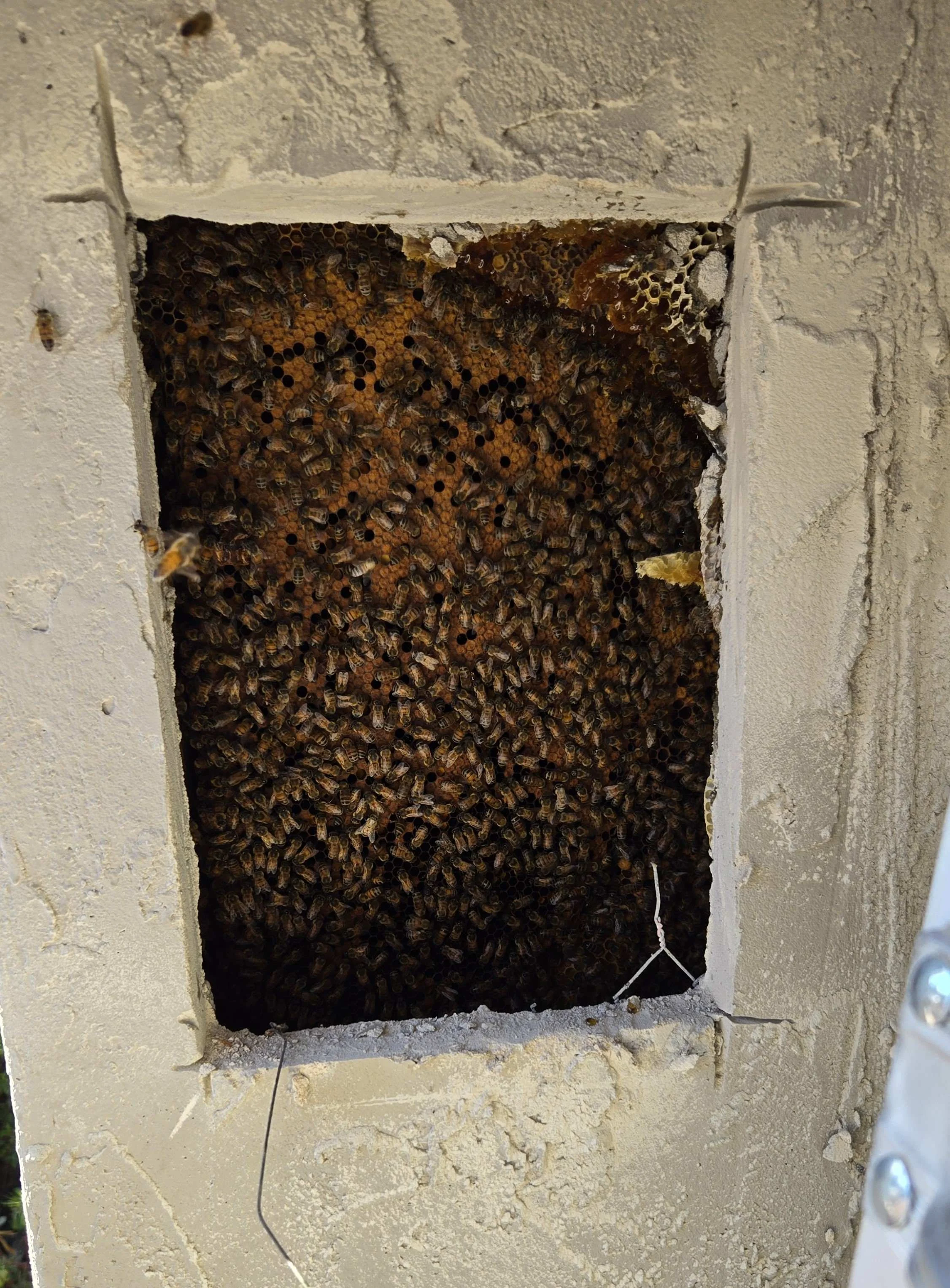
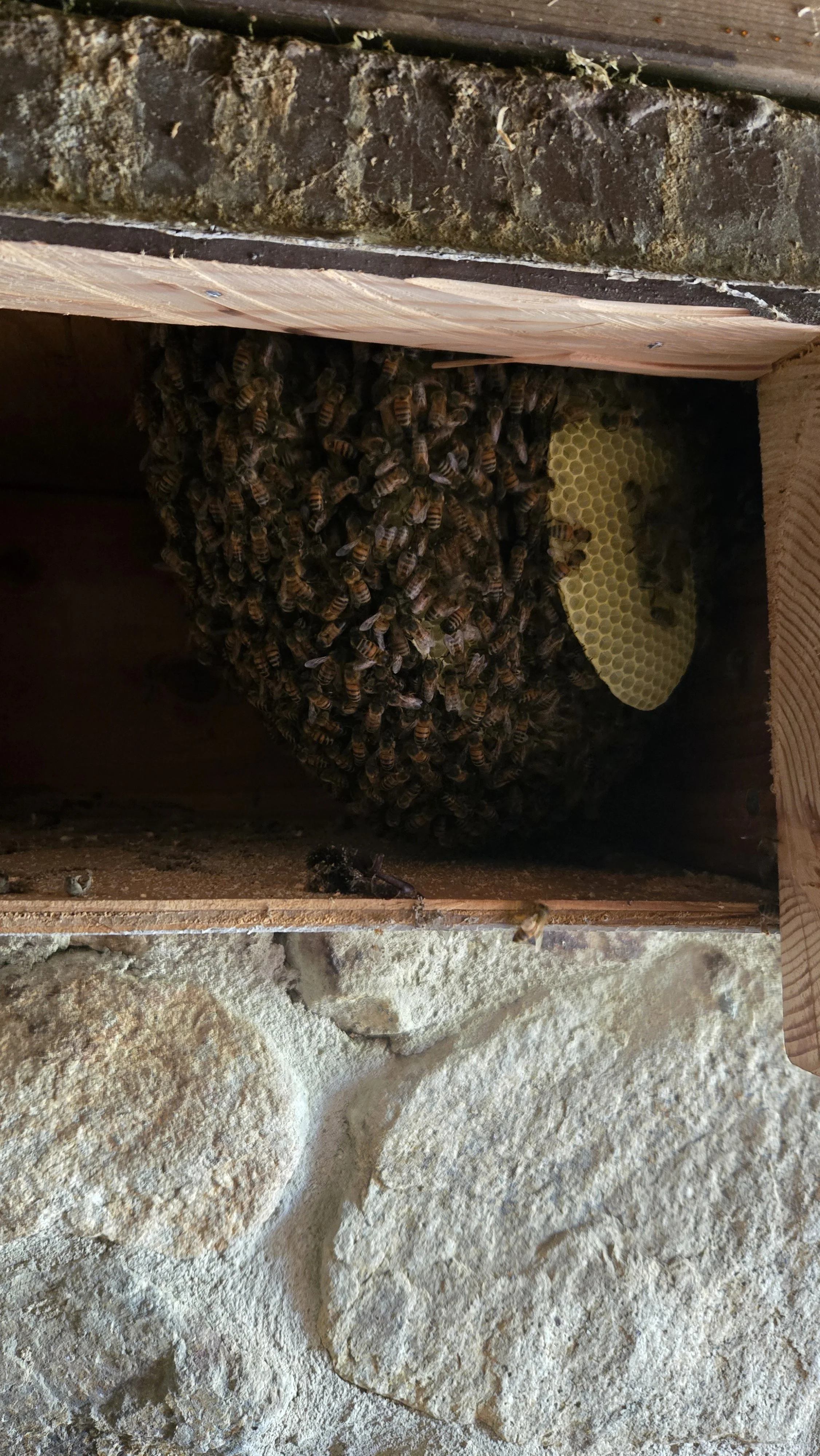
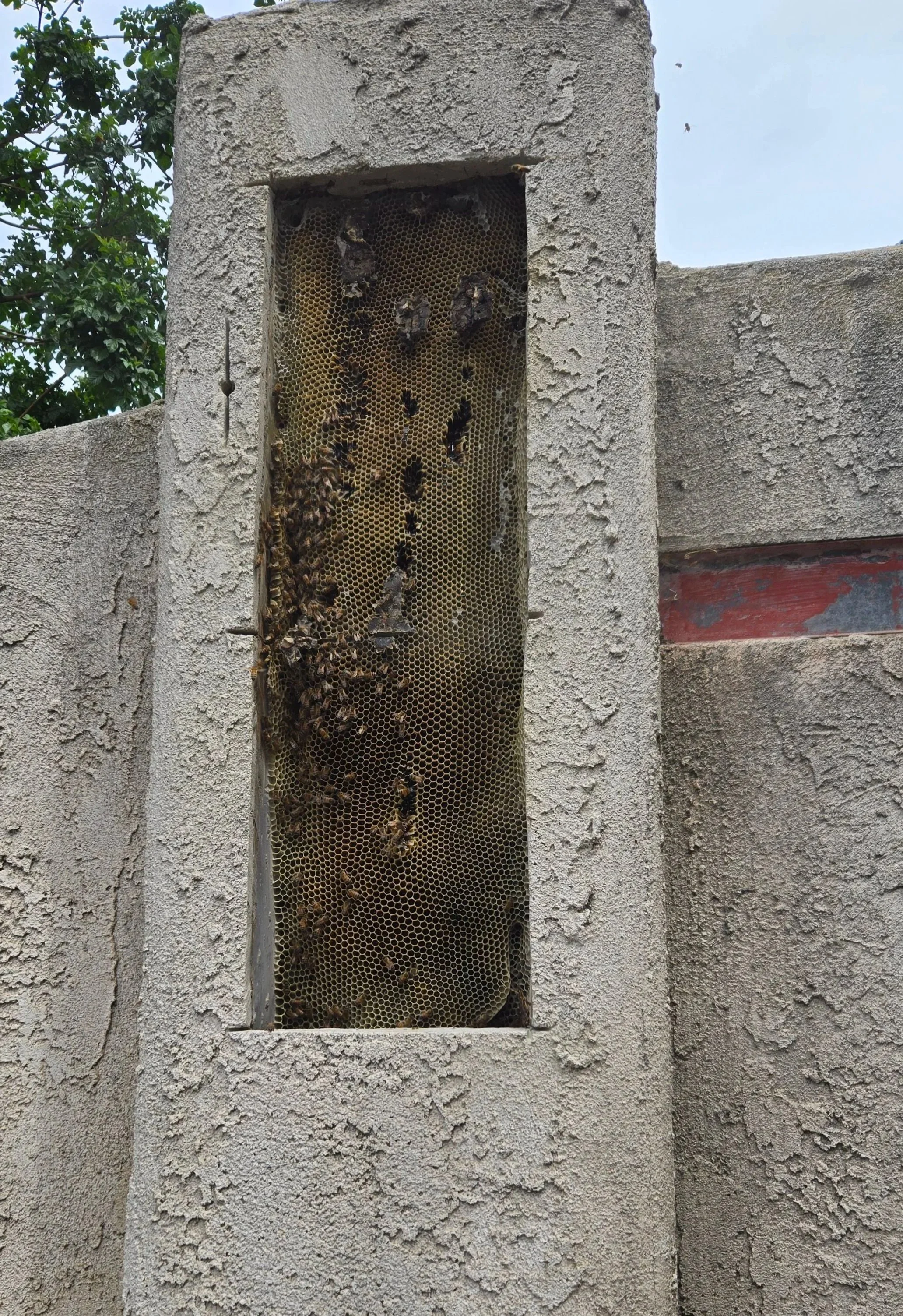
Once a swarm moves through that opening and decides to stay, the colony begins building immediately. Worker bees produce beeswax from glands on their abdomen and use it to construct hexagonal honeycomb cells. The colony stores nectar (which will cure into honey) in some cells and raises new bees in others.
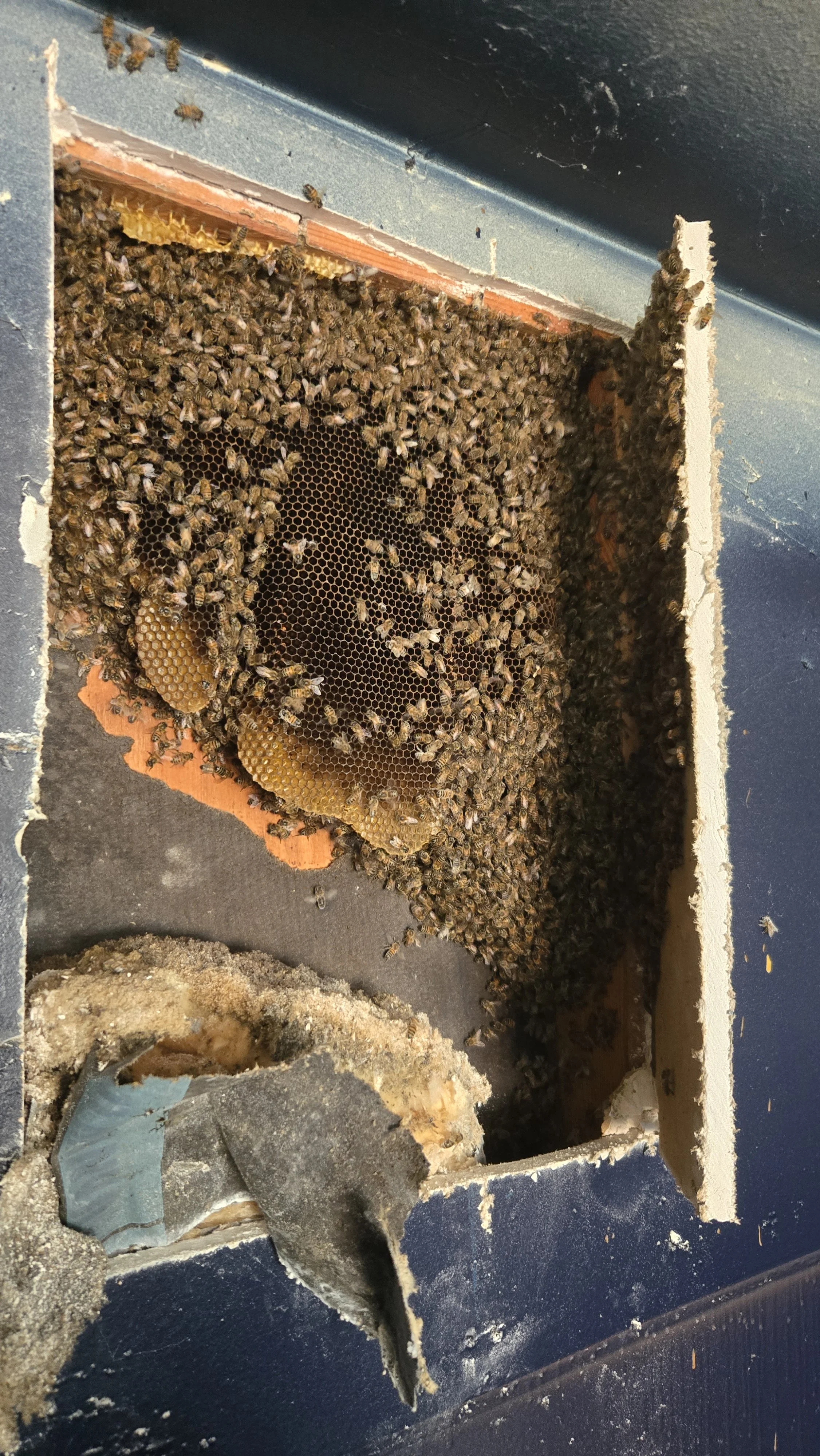
In the first few weeks, a newly established colony inside a wall may number a few thousand bees and have produced a modest amount of comb. By the end of a full season, the same colony can contain 20,000 to 50,000 bees and fill a substantial portion of the wall cavity with comb. In San Diego's warmer climate, colony growth accelerates — a colony that moved into a wall in March can be fully established and large by June.
The Consequence of Waiting
The longer a colony occupies a wall cavity, the more complex and costly the removal becomes — not because the bees get more dangerous (though a larger, well-established colony will be more defensive of its hive), but because of what they leave behind. Large amounts of honeycomb and stored honey must be completely removed after the bees are extracted. If comb is left inside the wall, several things happen:
The honey, no longer being temperature-regulated by the bee cluster, will melt in summer heat and begin migrating through surrounding drywall, staining ceilings and interior walls. The wax and honey also emit pheromone compounds that persist in the wall cavity for months or years and serve as a powerful signal to scouting bees from future swarms — effectively advertising the cavity as a proven nesting site. A wall with comb left inside will almost certainly be recolonized.
In addition, the protein-rich comb attracts secondary pests: ants, cockroaches, wax moths, and small rodents. What began as a bee problem can become a broader pest issue if not fully remediated.
Signs Bees Are Inside Your Wall
The most reliable sign is consistent bee traffic at a single small point on your exterior wall — bees entering and exiting the same gap repeatedly throughout the day. Other indicators include: a low-frequency hum or buzzing audible from inside the home, especially in quiet periods; bees appearing inside a room despite closed windows and doors (they've found a gap in the interior wall as well); or, in established colonies, honey-colored staining appearing on drywall or ceiling surfaces adjacent to exterior walls.
What Professional Removal Involves
Our process begins with locating the full extent of the hive using thermal imaging and small cameras — this lets us identify exactly where the colony is within the wall before opening anything, which minimizes unnecessary access work. We then open the wall at the point of best access, extract the live colony, remove all comb and honey, treat the cavity to neutralize pheromone traces, and seal the exterior entry point as part of the bee-proofing process included with every removal.
We include a 6-month warranty on all wall removals. If bees return to the same entry point within six months, we return at no additional charge.
If you're hearing bees in your wall or seeing consistent bee traffic entering a gap in your home's exterior, call us at 619-800-8521 or submit a free quote request. A photo of the entry point area helps us assess the situation before we arrive. We serve all San Diego County communities including Encinitas, Carlsbad, Poway, Clairemont, and Vista.