
Bees vs. Wasps vs. Yellow Jackets: How to Tell What You Have in San Diego
Bees vs. Wasps vs. Yellow Jackets: How to Tell What You Have in San Diego
"I have bees" is how most calls start — but a meaningful percentage of those calls turn out to be wasps, yellow jackets, or another stinging insect entirely. This matters because the removal approach, the urgency level, the safety considerations, and the professional you call are different depending on what species you're actually dealing with. This guide helps you identify what you're looking at before you call.
Honey Bees
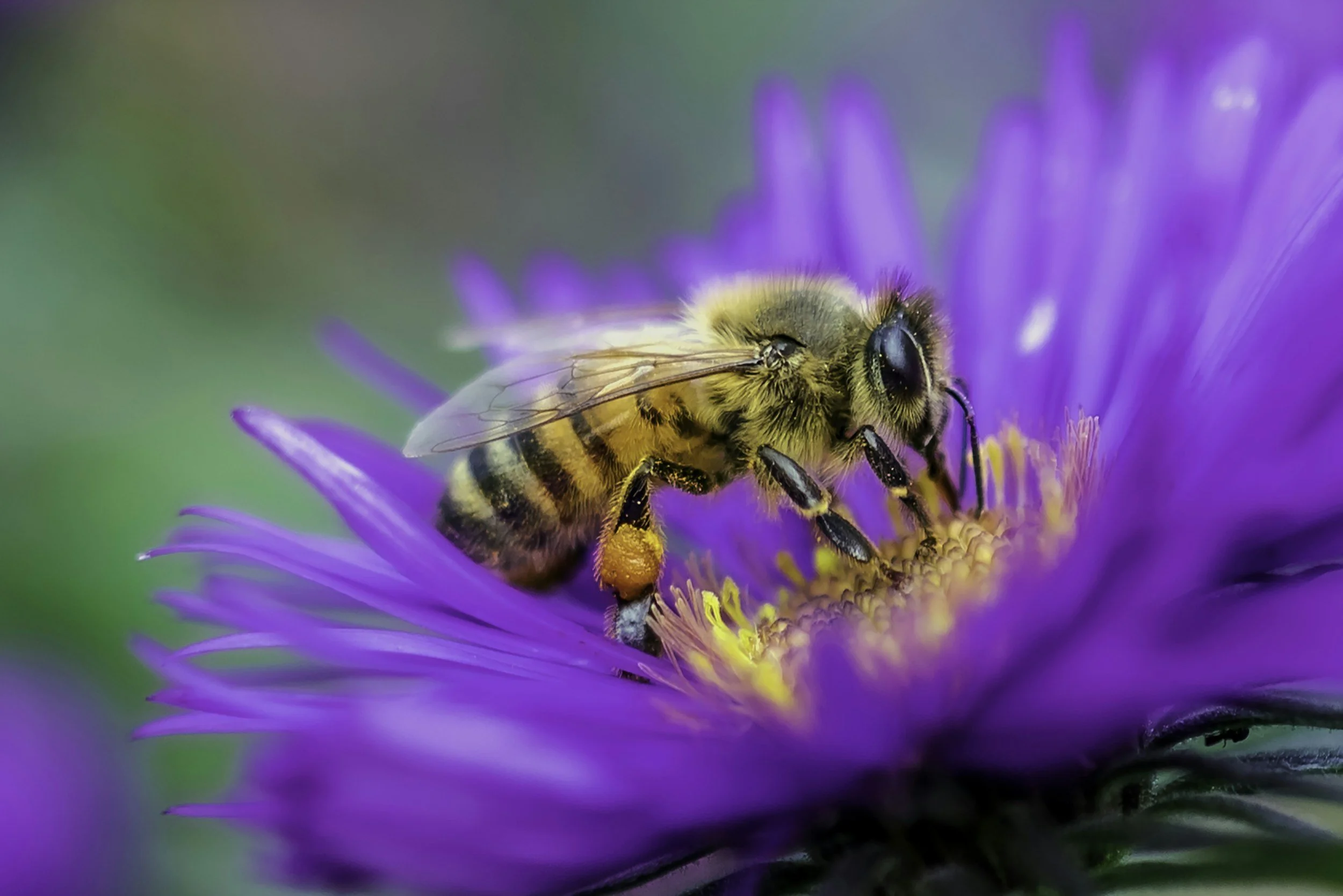
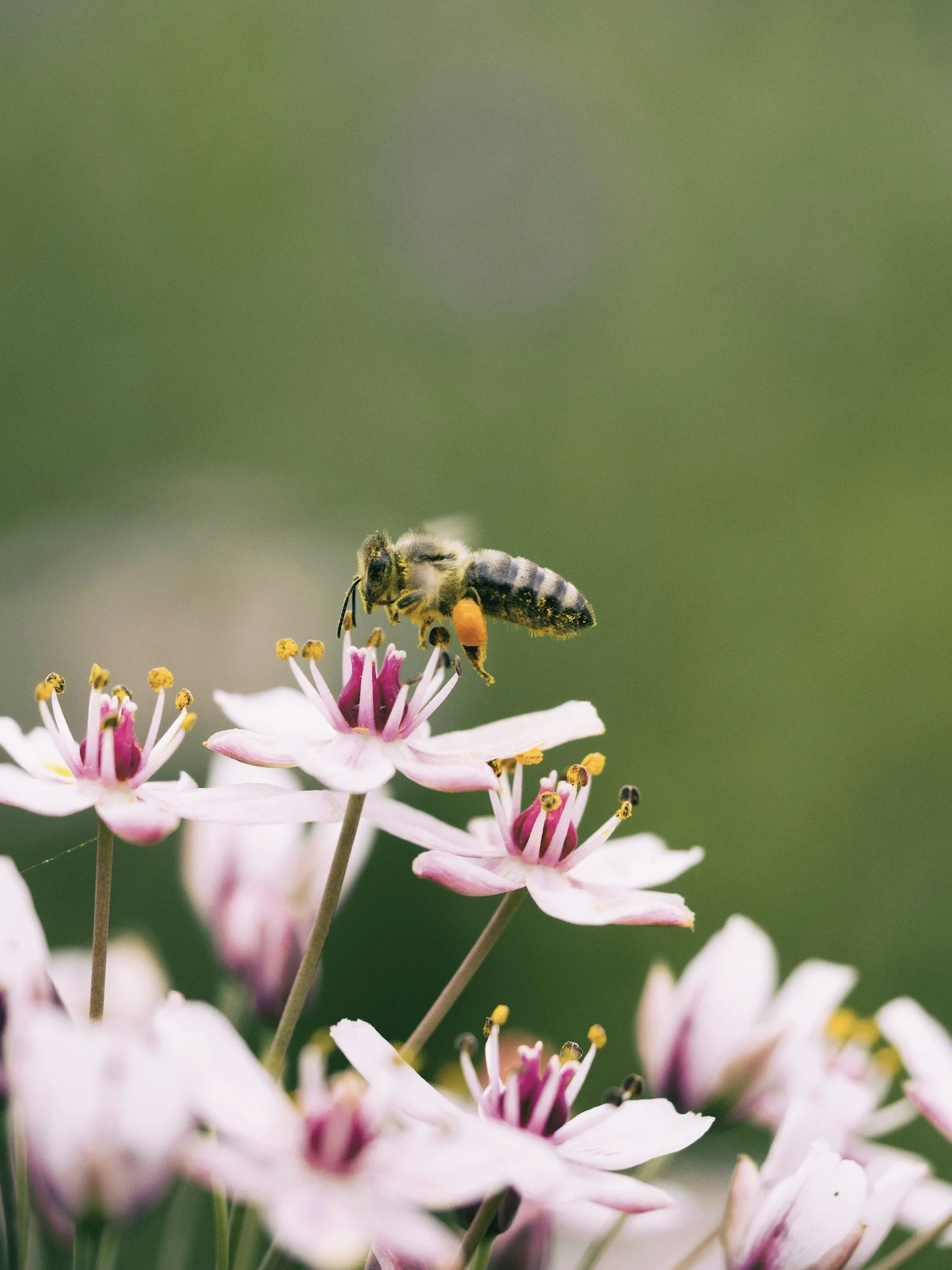
Honey bees are what most people visualize when they think of a bee: a roughly 5/8-inch insect with a fuzzy body, golden-amber and black banding, and a somewhat rounded abdomen. They are hairy — the fuzz is visible up close and is what catches pollen during foraging. Honey bees fly with a characteristic gentle hum and are generally deliberate in their movement, not darting or aggressive in their flight pattern when foraging normally.
When honey bees have established a hive, you will see bees entering and exiting a fixed point in a consistent, purposeful pattern — not hovering or circling. A swarm cluster will be a dense, calm mass of bees resting together.
Honey bees are the species that establishes permanent colonies in wall cavities, attics, rooflines, trees, and other enclosed spaces. They produce beeswax comb and store honey — which is why professional extraction is required rather than simple extermination.
Yellow Jackets
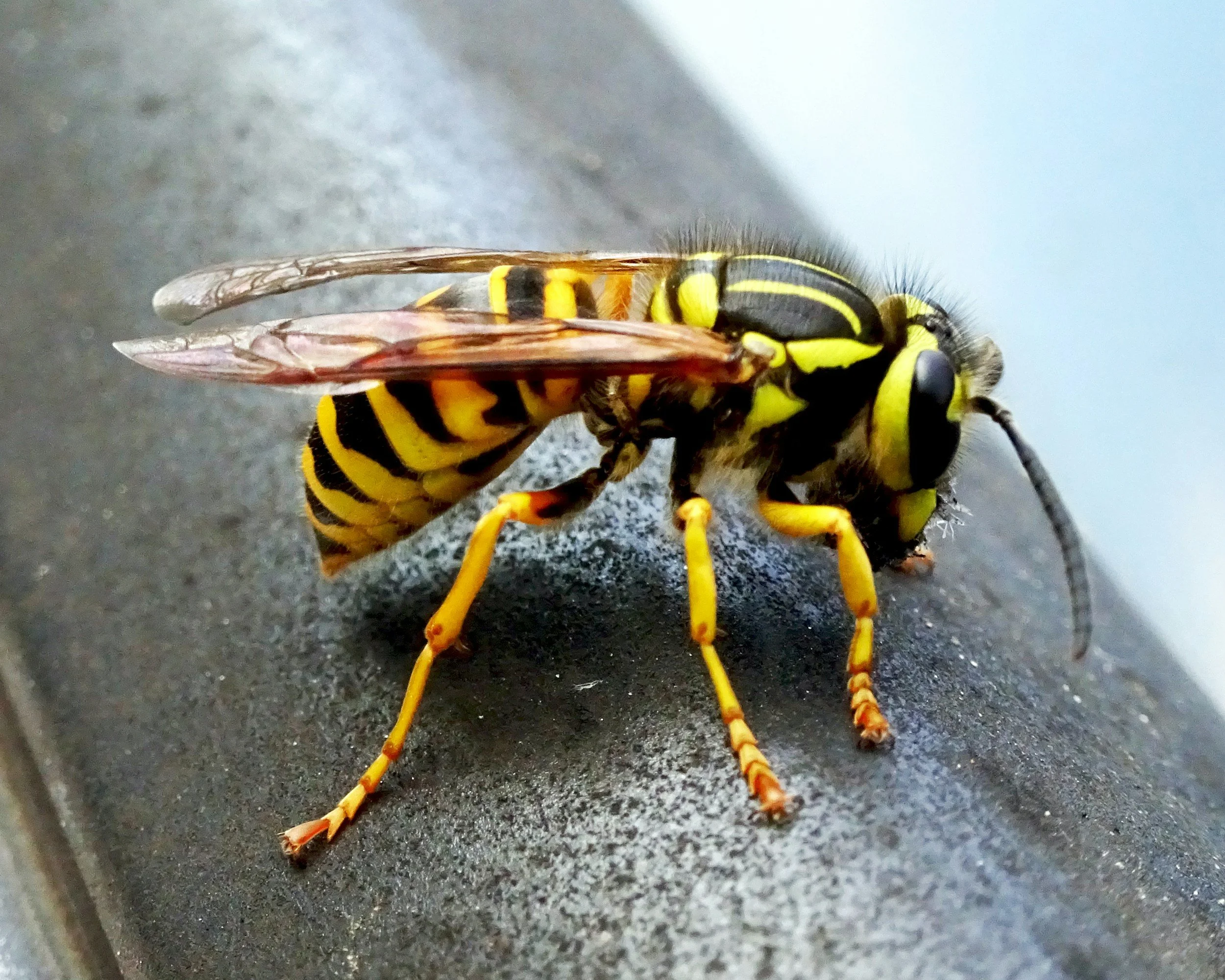
Yellow jackets are wasps, not bees, though they're similar in size and yellow-and-black coloration. The key visual differences: yellow jackets are smooth-bodied (not hairy), have a more defined waist creating a clearly hourglass shape, brighter and more contrasting yellow-and-black banding, and are generally more slender. Their flight pattern is faster and more erratic than honey bees.
Yellow jackets are aggressive in a way that honey bees generally are not — they sting readily and without the provocation threshold that honey bees have. They do not produce beeswax or honey, and their paper-like nests (usually in ground burrows, inside walls, or in attic spaces) are not honeycomb.
If you're getting stung near ground level in your yard, particularly near irrigation heads, near wood piles, or near a gap in a retaining wall, yellow jackets are a likely culprit. Ground-level nests are almost never honey bees; they are almost always yellow jackets or ground wasps.
Yellow jacket removal is typically handled by pest control companies rather than bee removal specialists, because there is no live relocation involved and the approach is extermination of the nest.
Paper Wasps
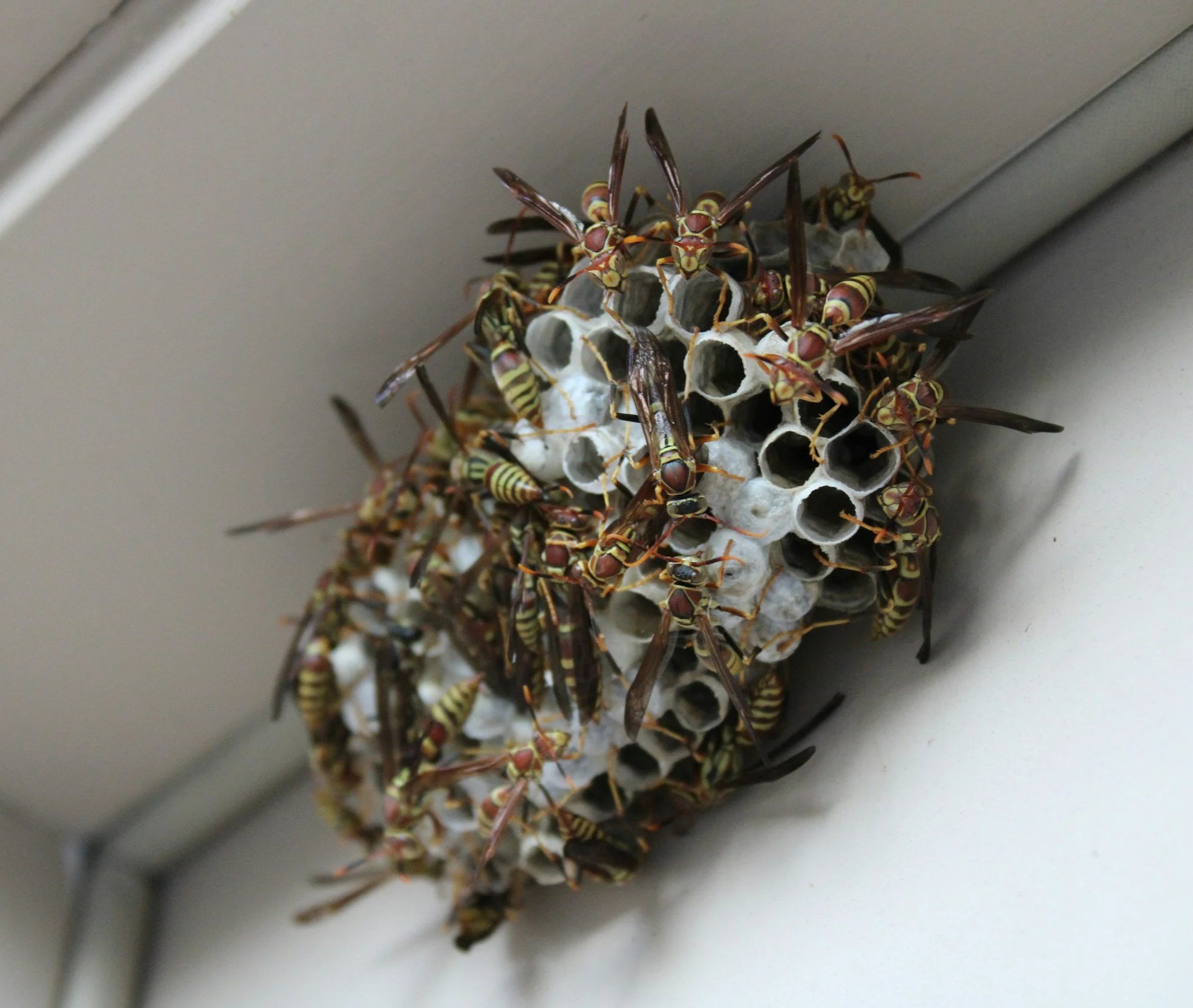
Paper wasps are slender, longer-bodied wasps — about 3/4 to 1 inch long — with very narrow waists and long legs that hang visibly in flight. Their nests are the open-celled, umbrella-shaped paper structures you find under eaves, in sheltered corners of outdoor structures, inside irrigation boxes, and under deck rails. These nests are small relative to a bee hive — usually a few dozen to a few hundred wasps — and the nest structure itself is visible rather than concealed inside a cavity.
Paper wasps are defensive of their nest but generally less aggressive than yellow jackets when not directly threatened. Their sting is painful. The open nest structure makes them visually distinct from honey bees, which build inside enclosed spaces.
Carpenter Bees
Carpenter bees are large — up to an inch long — and are sometimes mistaken for bumble bees. The clearest distinguishing feature: carpenter bees have a shiny, smooth, hairless black abdomen (bumble bees are fuzzy all over). You'll typically see them hovering near wood structures — deck rails, wooden fences, outdoor furniture, roof eaves — and investigating or drilling into wood surfaces.
Carpenter bees are solitary rather than colonial — they don't produce a hive or swarm. The male carpenter bee, which is the one that hovers aggressively in front of you, cannot sting. The female can sting but rarely does. Their holes in wood are round, about the diameter of a finger, and typically enter horizontally before turning at a right angle. They are primarily a wood-damage nuisance rather than a stinging threat.
Bumble Bees
Bumble bees are large, very fuzzy bees — fuzz covers the full body including the abdomen — with the characteristic black and yellow banding but a much more rounded, robust body shape than honey bees. They are gentle bees that rarely sting except when directly handled or when their nest (usually a small underground colony) is disturbed. Bumble bee colonies are small — a few dozen to a few hundred individuals — and do not produce significant honeycomb or cause the structural issues that honey bee colonies do.
Whether it is Honey Bees, Yellow Jackets or Wasp: Call Us
If you're seeing bees — fuzzy, amber-banded, deliberate in movement — entering and exiting a fixed point in a wall, roofline, fence, tree, or utility box, it's almost certainly honey bees and appropriate for professional live removal. If you're unsure, a photo sent with your quote request allows us to identify the species before we arrive and confirm the right response.
Call 619-800-8521 or fill out our free quote form for honey bee removal anywhere in San Diego County including La Jolla, Carmel Valley, Escondido, San Marcos, and Rancho Santa Fe.